East Hill Historic District

Why it's listed
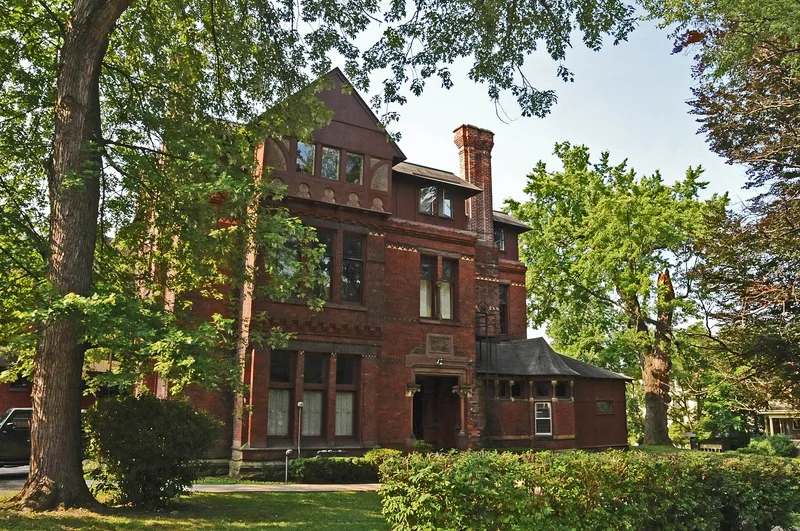
East Hill is a 65-acre neighborhood of 254 principal buildings on a steep hill east of downtown Ithaca, New York, bounded by the Cascadilla and Six-Mile Creek gorges. Buildings date from about 1830 to the 1930s, but most went up between 1870 and 1920, when Cornell University's opening and growth, along with horsecar and street railway links to downtown, set off waves of construction. The streets climb roughly 350 feet from Aurora Street to Eddy Street and hold a wide mix of styles: modest Greek Revival houses, Italianate and Victorian Gothic residences, Queen Anne and Shingle Style homes, Colonial Revival houses and Arts and Crafts examples. Notable landmarks include the Henry W. Sage Mansion at 512 East State Street and the Liberty Hyde Bailey House on Sage Place. Architect William H. Miller designed many buildings. Boarding houses, double houses and brick commercial blocks reflect student housing demand. The boundaries include the most intact historic streetscapes.
Machine-generated summary. This summary was generated by a language model from the official nomination document and has not been reviewed line by line by an editor. It may contain errors. Check the source document before relying on any detail. Source: nomination document (PDF) · catalog entry. Generated October 2026 (model claude-sonnet-5-5, prompt v1.0-2026-10-29).
| Styles | Greek Revival, Gothic Revival, Italianate, Queen Anne, Romanesque Revival, Renaissance Revival, Colonial Revival, Arts and Crafts |
|---|---|
| Areas of significance | Architecture |
| Acreage | 65 |
| Boundary source | NPS cultural-resource GIS polygon |
| Full listing page | East Hill Historic District (property record) |
What listing means for this property
This is a historic district. Buildings within its boundary are either contributing (they add to the district's significance) or non-contributing. Owners of contributing income-producing buildings can claim the 20% federal rehabilitation tax credit; homeowners should look at state credits. National Register districts impose no design review by themselves; a local historic district ordinance, if one exists, does (the difference explained).
General information, not legal or tax advice. Rules change; confirm with your State Historic Preservation Office or a qualified adviser.