East Farm

Why it's listed
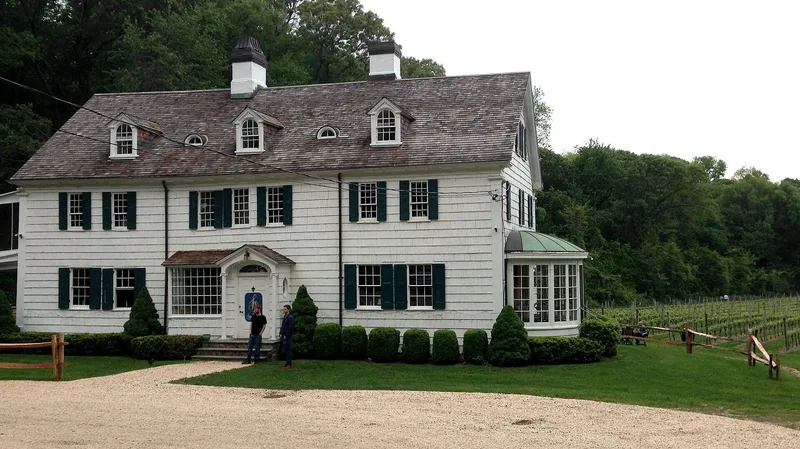
East Farm is a 31-acre waterfront estate in Head of the Harbor, overlooking Stony Brook Harbor. Its core is a wood-framed farmhouse dating to about 1710 and associated with the Smith family, early settlers of the area. In 1910 the architect Archibald M. Brown bought the house and enlarged it as his own country residence, finishing the work by 1914. He kept the original five-bay block with its massive center chimney and added smaller wings, a large dining room with harbor views, a kitchen wing and guest rooms. Colonial Revival detailing was chosen to harmonize with the older house. The grounds hold a formal garden, specimen plantings, a tennis court and dock, plus eighteenth-century outbuildings including a barn, a milk house and cottages. The property was listed for its architecture and for the way it layers an authentic Colonial farmstead with early twentieth-century estate design, all on a parcel that remains intact.
Machine-generated summary. This summary was generated by a language model from the official nomination document and has not been reviewed line by line by an editor. It may contain errors. Check the source document before relying on any detail. Source: nomination document (PDF) · catalog entry. Generated October 2026 (model claude-sonnet-5-5, prompt v1.0-2026-10-29).
| Period of significance | c1710-c1914 |
|---|---|
| Styles | Colonial; Colonial Revival |
| Areas of significance | Architecture, Social History, Entertainment/Recreation, Exploration/Settlement |
| Acreage | 31 |
| Boundary source | NPS cultural-resource GIS polygon |
| Full listing page | East Farm (property record) |
What listing means for this property
This is a historic district. Buildings within its boundary are either contributing (they add to the district's significance) or non-contributing. Owners of contributing income-producing buildings can claim the 20% federal rehabilitation tax credit; homeowners should look at state credits. National Register districts impose no design review by themselves; a local historic district ordinance, if one exists, does (the difference explained).
General information, not legal or tax advice. Rules change; confirm with your State Historic Preservation Office or a qualified adviser.