Dundas Castle

Why it's listed
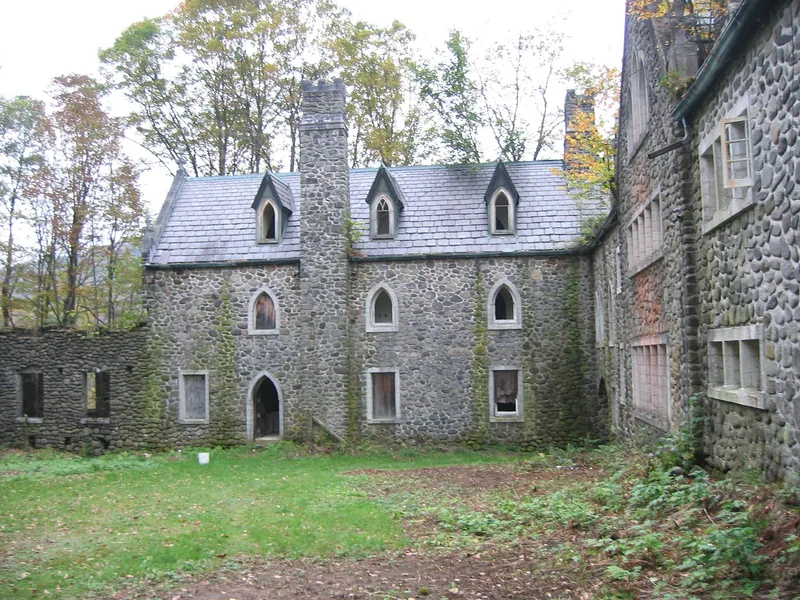
Dundas Castle, also known as Craig-E-Clair, is a 964-acre estate in the Beaverkill valley northwest of Roscoe, spanning Sullivan and Delaware Counties. Its main feature is a rambling, unfinished stone castle with crenellations, cylindrical turrets, a bailey, a retaining wall styled as a curtain wall, and a barbican-like folly. Built between 1910 and 1924 for Ralph Wurts-Dundas, it encloses an earlier frame country house from the late 1880s. Nearby are an ornate wrought-iron entrance gate with stone walls and a small stone-arched bridge, both thought to date from the castle period. The land was consolidated from farms in the late nineteenth century and bought by Dundas in 1907. The estate reflects the Catskills' growth as a fishing and retreat destination after the railroad arrived. Later Camp Eureka buildings, the farm group and some service structures do not contribute. The castle is vacant today.
Machine-generated summary. This summary was generated by a language model from the official nomination document and has not been reviewed line by line by an editor. It may contain errors. Check the source document before relying on any detail. Source: nomination document (PDF) · catalog entry. Generated October 2026 (model claude-sonnet-5-5, prompt v1.0-2026-10-29).
| Styles | Late 19th and 20th century revivals (Gothic and Elizabethan features) |
|---|---|
| Areas of significance | Social History, Architecture |
| Acreage | 964 |
| Boundary source | NPS cultural-resource GIS polygon |
| Full listing page | Dundas Castle (property record) |
What listing means for this property
This is a historic district. Buildings within its boundary are either contributing (they add to the district's significance) or non-contributing. Owners of contributing income-producing buildings can claim the 20% federal rehabilitation tax credit; homeowners should look at state credits. National Register districts impose no design review by themselves; a local historic district ordinance, if one exists, does (the difference explained).
Noted as vacant in the nomination. Nomination documents can be decades old; current status may differ. If you are considering buying an empty listed property, read the due-diligence checklist.
General information, not legal or tax advice. Rules change; confirm with your State Historic Preservation Office or a qualified adviser.