Dolge Company Factory Complex

Why it's listed
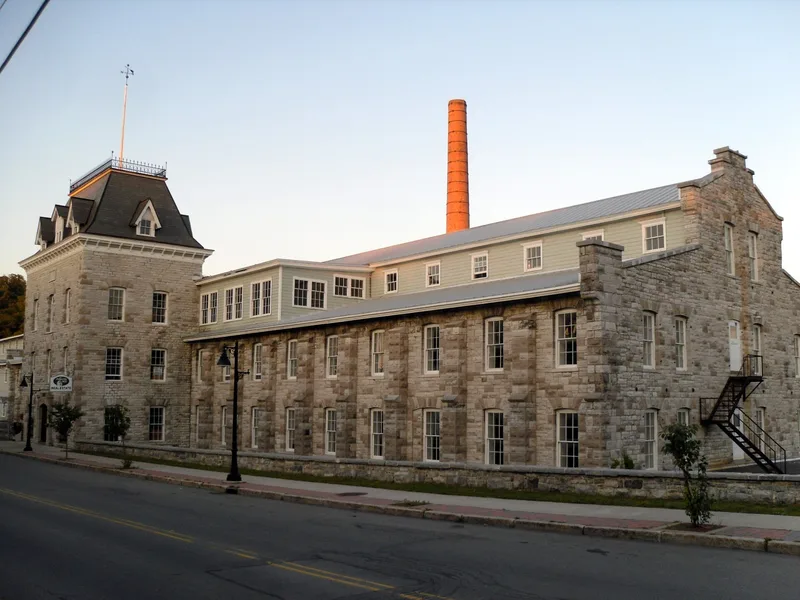
Straddling East Canada Creek at Dolgeville, New York, this factory complex began as the Alfred Dolge and Son felt and sounding board works. Its centerpiece is a long limestone factory of 1886, built on the site of an old tannery, with a mansard-roofed office tower and buttressed walls that give a fortress-like look. Nearby are a frame factory converted from a horse barn, an iron Pratt truss bridge of 1887 and a group of smaller buildings. Across the creek stands Dolge's wooden mansion of 1895, with ornate interiors carved and decorated by German, Swiss and Italian craftsmen. Dolge, a German-born manufacturer, laid out the village and provided schools, a library, utilities and a park. He also pioneered noncontributory pensions, life insurance and earnings-sharing for employees. After his business failed in 1899, the Daniel Green Company took over and has kept the buildings in excellent repair. The property was recognized for its Victorian architecture and for its link to Dolge's social experiments.
Machine-generated summary. This summary was generated by a language model from the official nomination document and has not been reviewed line by line by an editor. It may contain errors. Check the source document before relying on any detail. Source: nomination document (PDF) · catalog entry. Generated October 2026 (model claude-sonnet-5-5, prompt v1.0-2026-10-29).
| Styles | Victorian |
|---|---|
| Areas of significance | Industry, Transportation, Architecture, Social History |
| Acreage | 17 |
| Boundary source | NPS cultural-resource GIS polygon |
| Full listing page | Dolge Company Factory Complex (property record) |
What listing means for this property
This is a historic district. Buildings within its boundary are either contributing (they add to the district's significance) or non-contributing. Owners of contributing income-producing buildings can claim the 20% federal rehabilitation tax credit; homeowners should look at state credits. National Register districts impose no design review by themselves; a local historic district ordinance, if one exists, does (the difference explained).
General information, not legal or tax advice. Rules change; confirm with your State Historic Preservation Office or a qualified adviser.