Delanson Historic District

Why it's listed
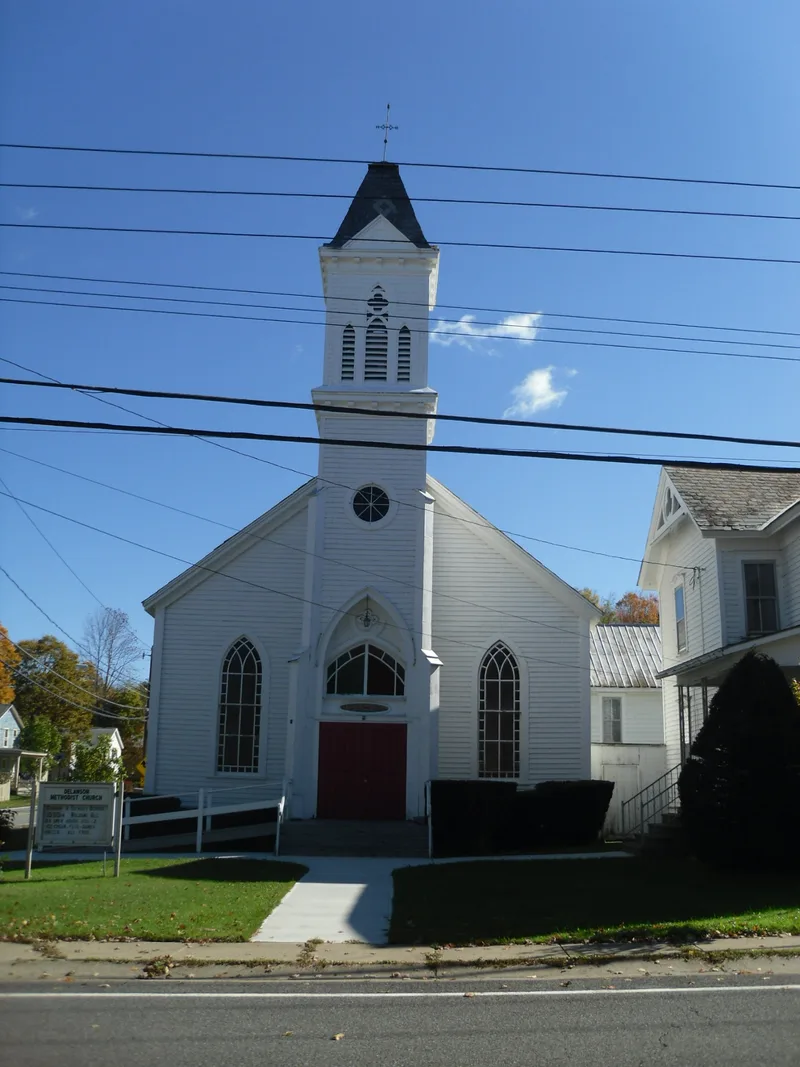
Along Main Street in the village of Delanson, nineteen properties form the only intact concentration of fashionable late Victorian architecture in the town of Duanesburg. Seventeen houses, a former general store and a Methodist church, with a number of barns and sheds, sit on small lots set back at even distances. Most are one-and-a-half or two-story frame buildings dating from about 1860 to 1890. Many show Italianate features such as low hipped roofs, bracketed eaves and projecting bays, while others show Second Empire, Gothic Revival and Queen Anne/Eastlake influences. The neighborhood grew after the Albany & Susquehanna Railroad began construction through the valley in 1861, bringing railroad workers, coal yards and commerce. The village prospered for several decades, then declined as rail use fell and the coal yards closed in 1936. Because little mid-twentieth-century building followed, the street keeps the look of a prosperous late nineteenth-century residential neighborhood.
Machine-generated summary. This summary was generated by a language model from the official nomination document and has not been reviewed line by line by an editor. It may contain errors. Check the source document before relying on any detail. Source: nomination document (PDF) · catalog entry. Generated October 2026 (model claude-sonnet-5-5, prompt v1.0-2026-10-29).
| Styles | Late Victorian picturesque styles, including Italianate, Carpenter Gothic, Second Empire and Queen Anne/Eastlake |
|---|---|
| Areas of significance | Architecture |
| Acreage | 11 |
| Boundary source | NPS cultural-resource GIS polygon |
| Full listing page | Delanson Historic District (property record) |
What listing means for this property
This is a historic district. Buildings within its boundary are either contributing (they add to the district's significance) or non-contributing. Owners of contributing income-producing buildings can claim the 20% federal rehabilitation tax credit; homeowners should look at state credits. National Register districts impose no design review by themselves; a local historic district ordinance, if one exists, does (the difference explained).
General information, not legal or tax advice. Rules change; confirm with your State Historic Preservation Office or a qualified adviser.