De Witt Park Historic District

Why it's listed
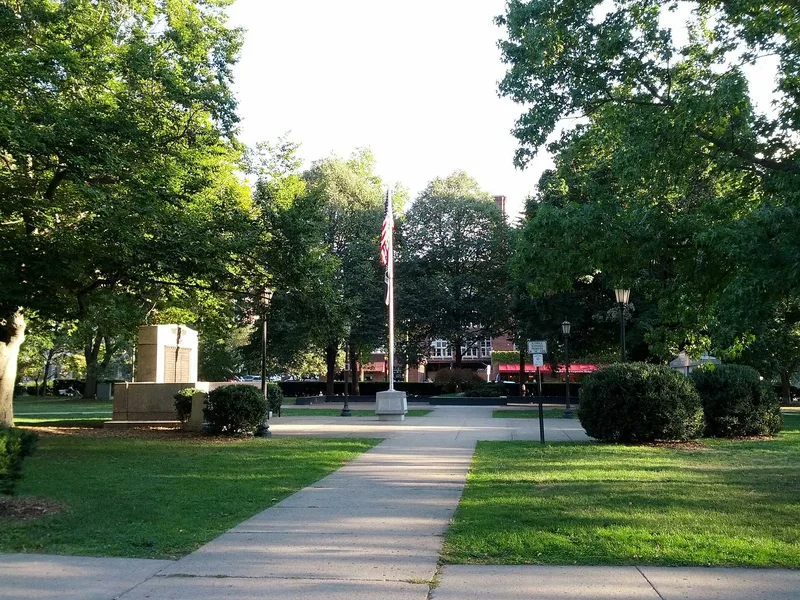
DeWitt Park Historic District occupies the city block around DeWitt Park in downtown Ithaca, plus parts of surrounding blocks along North Cayuga, North Tioga, Court and Buffalo Streets. The park began as the town's Public Square, and the area was laid out by Ithaca's founder, Simeon DeWitt, in the early 1800s. Today the district mixes government, educational, professional, religious and residential uses, with mostly 19th and early 20th century eclectic architecture. Notable buildings include the Old Tompkins County Court House, described as the oldest surviving Gothic Revival courthouse in New York State, the 1820s Bank of Newburgh, the Williams-Fisher House, the Romanesque First Presbyterian and First Baptist churches, and the 1912 DeWitt Junior High School by William Henry Miller. Two modern buildings, the public library and a savings and loan office, were designed to suit their surroundings. Many houses became offices with little exterior change. The district covers roughly 18 acres.
Machine-generated summary. This summary was generated by a language model from the official nomination document and has not been reviewed line by line by an editor. It may contain errors. Check the source document before relying on any detail. Source: nomination document (PDF) · catalog entry. Generated October 2026 (model claude-sonnet-5-5, prompt v1.0-2026-10-29).
| Styles | Predominantly 19th and early 20th century eclectic, including Gothic Revival, Romanesque and Greek Revival buildings |
|---|---|
| Areas of significance | Commerce, Architecture |
| Acreage | 18 |
| Boundary source | NPS cultural-resource GIS polygon |
| Full listing page | De Witt Park Historic District (property record) |
What listing means for this property
This is a historic district. Buildings within its boundary are either contributing (they add to the district's significance) or non-contributing. Owners of contributing income-producing buildings can claim the 20% federal rehabilitation tax credit; homeowners should look at state credits. National Register districts impose no design review by themselves; a local historic district ordinance, if one exists, does (the difference explained).
General information, not legal or tax advice. Rules change; confirm with your State Historic Preservation Office or a qualified adviser.