Davis Field

Why it's listed
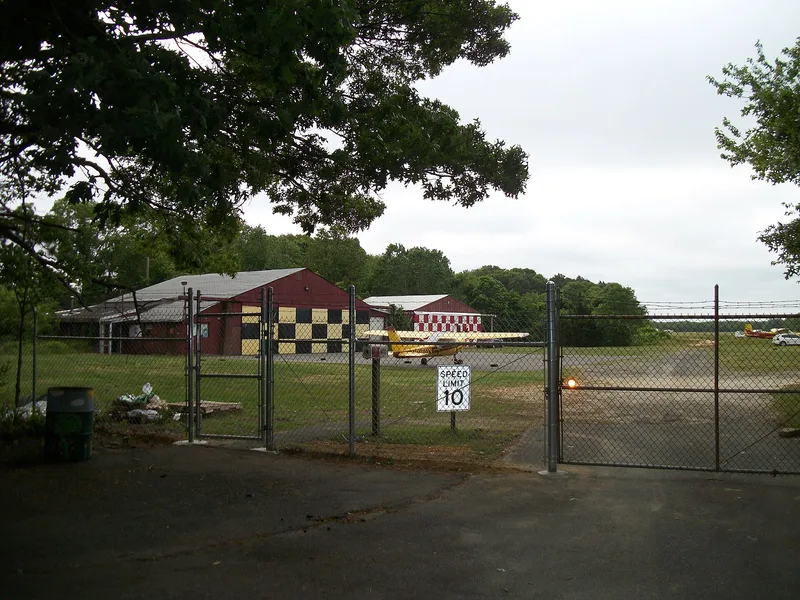
Davis Field, also called the Bayport Aerodrome, is a grass-strip airfield in Bayport, Suffolk County, New York. Curtis Davis, Sr., a Civil Air Patrol pilot during World War II, established it in 1945 on land his father had bought in 1910 and used as a cornfield. The historic core includes two parallel grass runways, two steel-frame hangars, and a small butcher shop built around 1898 in Sayville and moved to the field about 1945, where it now serves as a pilot's lounge and flight school office. One hangar was moved within the property around 1985 to meet federal aviation rules. The field recalls the period after World War II when returning veterans revived recreational flying and small airfields were common across Long Island. The Town of Islip bought the field in 1978 after neighbors protested a housing proposal. It remains active, hosting flight schools and the Bayport Aerodrome Society, which restores vintage aircraft.
Machine-generated summary. This summary was generated by a language model from the official nomination document and has not been reviewed line by line by an editor. It may contain errors. Check the source document before relying on any detail. Source: nomination document (PDF) · catalog entry. Generated October 2026 (model claude-sonnet-5-5, prompt v1.0-2026-10-29).
| Period of significance | 1945-1953 |
|---|---|
| Styles | No style |
| Areas of significance | Transportation, Community Planning and Development, Architecture |
| Acreage | 59.9 |
| Boundary source | NPS cultural-resource GIS polygon |
| Full listing page | Davis Field (property record) |
What listing means for this property
This is a historic district. Buildings within its boundary are either contributing (they add to the district's significance) or non-contributing. Owners of contributing income-producing buildings can claim the 20% federal rehabilitation tax credit; homeowners should look at state credits. National Register districts impose no design review by themselves; a local historic district ordinance, if one exists, does (the difference explained).
General information, not legal or tax advice. Rules change; confirm with your State Historic Preservation Office or a qualified adviser.