Cutting, Bayard, Estate

Why it's listed
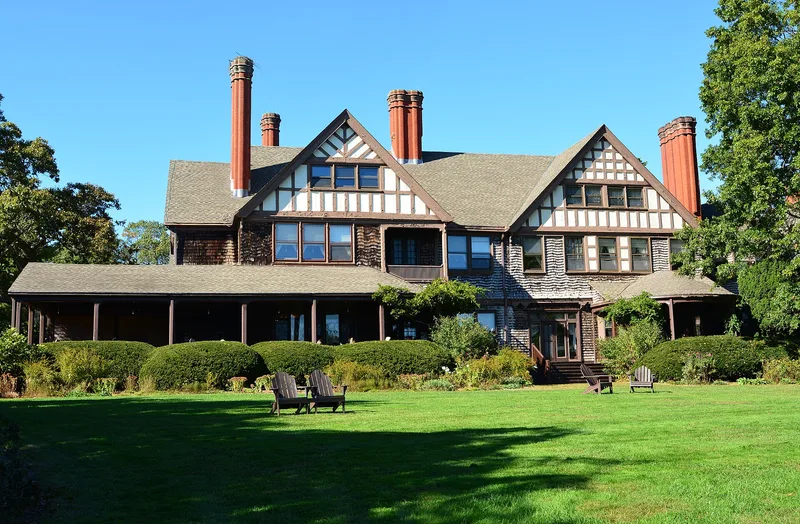
Westbrook is a former summer estate near Great River on Long Island's south shore, now owned by New York State. W. Bayard Cutting, a financier, bought the former Lorillard property in 1886 and hired New York architect Charles Haight to design a long, rambling two-and-a-half story house of four blocks with transverse gables, brick chimneys, shingled walls and half-timbering. Interiors carry Tudor and Jacobean-style paneling and carved woodwork. Frederick Law Olmsted landscaped the grounds, which hold a large collection of trees and shrubs. Surviving outbuildings include a half-timbered gatehouse, a carriage house with a cupola, and Westbrook Farm, whose brick Cow Barn, stable, animal hospital and carpenter shop surround a courtyard. The estate was listed because house, grounds and farm survive together as an example of late 19th century design and of the south shore country-seat community. The house and most grounds are open as the Bayard Cutting Arboretum, noted for its conifers.
Machine-generated summary. This summary was generated by a language model from the official nomination document and has not been reviewed line by line by an editor. It may contain errors. Check the source document before relying on any detail. Source: nomination document (PDF) · catalog entry. Generated October 2026 (model claude-sonnet-5-5, prompt v1.0-2026-10-29).
| Period of significance | 19th Century |
|---|---|
| Styles | Picturesque, with English Tudor/Jacobean-style ornamentation and half-timbering |
| Areas of significance | Landscape Architecture, Architecture |
| Acreage | 750 |
| Boundary source | NPS cultural-resource GIS polygon |
| Full listing page | Cutting, Bayard, Estate (property record) |
What listing means for this property
This is a historic district. Buildings within its boundary are either contributing (they add to the district's significance) or non-contributing. Owners of contributing income-producing buildings can claim the 20% federal rehabilitation tax credit; homeowners should look at state credits. National Register districts impose no design review by themselves; a local historic district ordinance, if one exists, does (the difference explained).
General information, not legal or tax advice. Rules change; confirm with your State Historic Preservation Office or a qualified adviser.