Crane, Gerard, House

Why it's listed
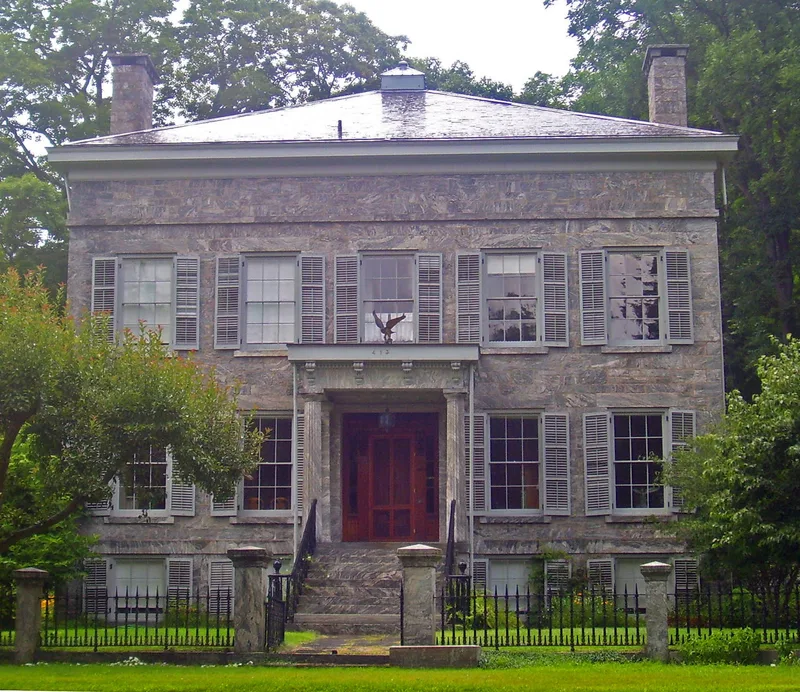
Built in 1849 for Gerard Crane, this two and one-half story Greek Revival house sits on a knoll at the edge of Somers, Westchester County. Its walls are made of a local marbleized granite laid with exceptional masonry craftsmanship, an unusual choice in an area where granite was more often used for fences and foundations. The five-bay facade has quoins and a Doric-columned portico, and the interior includes elaborate English Renaissance plasterwork and Italian marble mantelpieces. The 30-acre grounds retain a barn, summer kitchen, shop, springhouse, privy, stone bridge, fences and a stretch of the old Somerstown Turnpike. Crane was a menagerie owner, a founder of the Zoological Institute, a bank president and a town supervisor. Somers was a center of the nineteenth-century circus industry, and the house reflects the wealth that business created. The estate keeps its rural, mid-nineteenth century character despite nearby modern development.
Machine-generated summary. This summary was generated by a language model from the official nomination document and has not been reviewed line by line by an editor. It may contain errors. Check the source document before relying on any detail. Source: nomination document (PDF) · catalog entry. Generated October 2026 (model claude-sonnet-5-5, prompt v1.0-2026-10-29).
| Period of significance | 1800-1899 |
|---|---|
| Styles | Greek Revival |
| Areas of significance | Architecture, Social History |
| Acreage | 30 |
| Boundary source | NPS cultural-resource GIS polygon |
| Full listing page | Crane, Gerard, House (property record) |
What listing means for this property
This is a historic district. Buildings within its boundary are either contributing (they add to the district's significance) or non-contributing. Owners of contributing income-producing buildings can claim the 20% federal rehabilitation tax credit; homeowners should look at state credits. National Register districts impose no design review by themselves; a local historic district ordinance, if one exists, does (the difference explained).
General information, not legal or tax advice. Rules change; confirm with your State Historic Preservation Office or a qualified adviser.