Copake Iron Works Historic District

Why it's listed
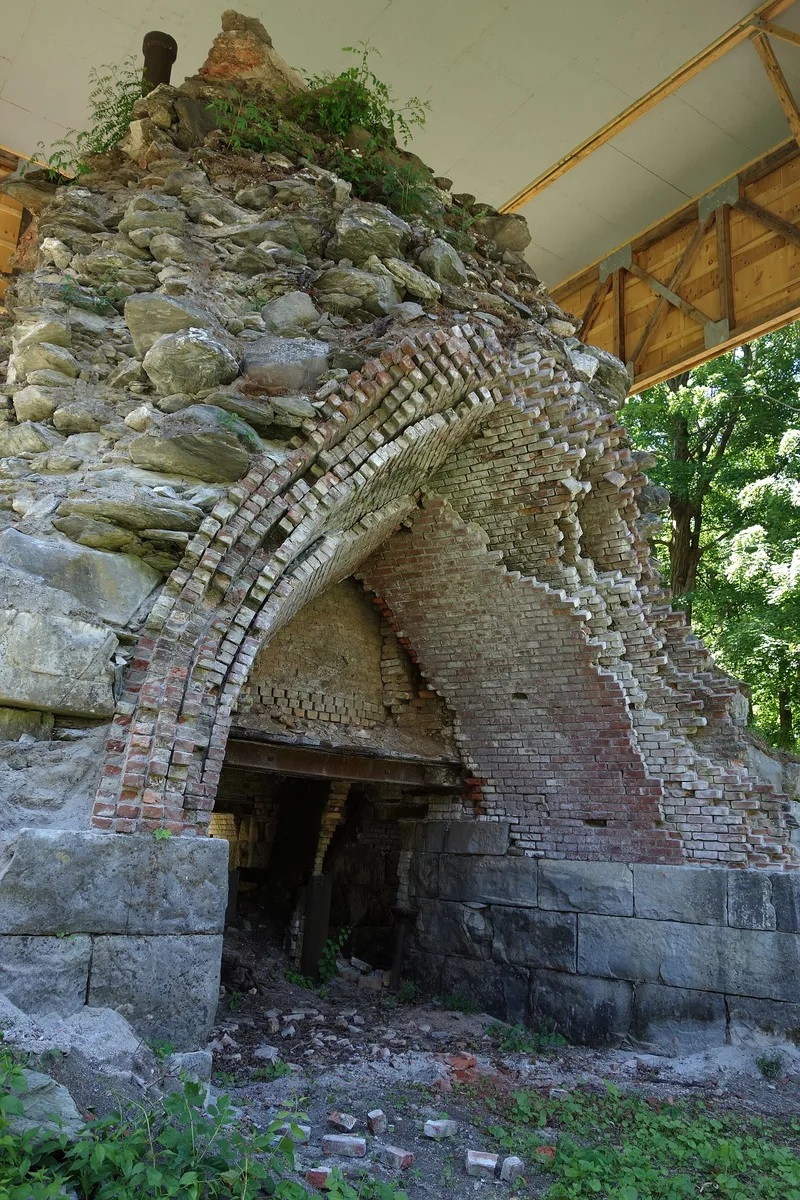
Within Taconic State Park near Copake Falls, New York, about 18 acres hold the remains of the Copake Iron Works, an iron-producing complex established near the middle of the 19th century. The core centers on a c. 1872 charcoal blast furnace, now deteriorated and stripped of its stone veneer, along with retaining walls, a penstock, a railroad bridge abutment, an ironworks office with a brick powder house, a brick blowing engine house with a machine and pattern shop, and several modest workers' houses. The Greek Revival house built for Isaac Chesbrough, a partner in the company, is now the park manager's residence. The works belonged to the Salisbury Iron District, which spans parts of four states. It is described as arguably the most complete and readable 19th-century ironworks in that region. Most surviving features relate to the Miles family, who expanded the operation after 1862. Undisturbed ground suggests further archaeological potential.
Machine-generated summary. This summary was generated by a language model from the official nomination document and has not been reviewed line by line by an editor. It may contain errors. Check the source document before relying on any detail. Source: nomination document (PDF) · catalog entry. Generated October 2026 (model claude-sonnet-5-5, prompt v1.0-2026-10-29).
| Styles | Mid 19th Century: Greek Revival, Picturesque; other: vernacular |
|---|---|
| Areas of significance | Industry, Architecture |
| Acreage | 30 |
| Boundary source | NPS cultural-resource GIS polygon |
| Full listing page | Copake Iron Works Historic District (property record) |
What listing means for this property
This is a historic district. Buildings within its boundary are either contributing (they add to the district's significance) or non-contributing. Owners of contributing income-producing buildings can claim the 20% federal rehabilitation tax credit; homeowners should look at state credits. National Register districts impose no design review by themselves; a local historic district ordinance, if one exists, does (the difference explained).
General information, not legal or tax advice. Rules change; confirm with your State Historic Preservation Office or a qualified adviser.