Constableville Village Historic District

Why it's listed
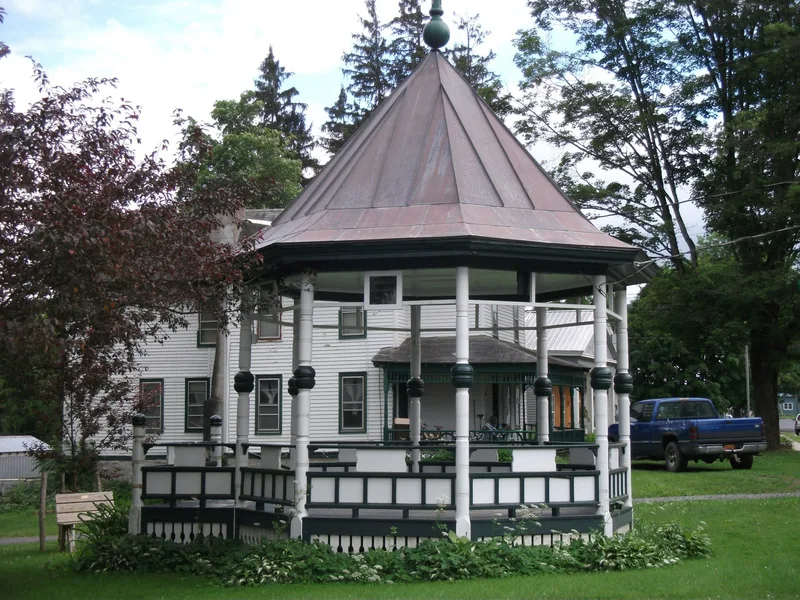
Constableville is a small village on the Tug Hill Upland in southern Lewis County, New York, divided by the Sugar River. The historic district covers 59.4 acres and 112 buildings and structures, mostly built between about 1828 and 1900. Main Street holds two-story frame commercial buildings and residences, while other streets contain churches, a firehouse, a rural cemetery, an 1887 iron truss bridge and a 1928 brick school. The architecture is largely vernacular, drawing on Greek Revival and Italianate styles. The village was founded in 1796 by an agent of William Constable, a New York City land speculator who with partners acquired the Macomb Purchase. Growth peaked between 1850 and 1880, and fires in 1870 and 1887 led to rebuilding on Main Street, including St. Mary's Church and a park gazebo. Little was built after 1900, so the village keeps a high level of integrity, including many outbuildings and storefronts, and is surrounded by farmland designated for agricultural preservation.
Machine-generated summary. This summary was generated by a language model from the official nomination document and has not been reviewed line by line by an editor. It may contain errors. Check the source document before relying on any detail. Source: nomination document (PDF) · catalog entry. Generated October 2026 (model claude-sonnet-5-5, prompt v1.0-2026-10-29).
| Period of significance | 1828-1928 |
|---|---|
| Styles | Regional vernacular Greek Revival, Italianate and Gothic Revival |
| Areas of significance | Architecture |
| Acreage | 59.4 |
| Boundary source | NPS cultural-resource GIS polygon |
| Full listing page | Constableville Village Historic District (property record) |
What listing means for this property
This is a historic district. Buildings within its boundary are either contributing (they add to the district's significance) or non-contributing. Owners of contributing income-producing buildings can claim the 20% federal rehabilitation tax credit; homeowners should look at state credits. National Register districts impose no design review by themselves; a local historic district ordinance, if one exists, does (the difference explained).
General information, not legal or tax advice. Rules change; confirm with your State Historic Preservation Office or a qualified adviser.