Cold Spring Harbor Laboratory Historic District

Why it's listed
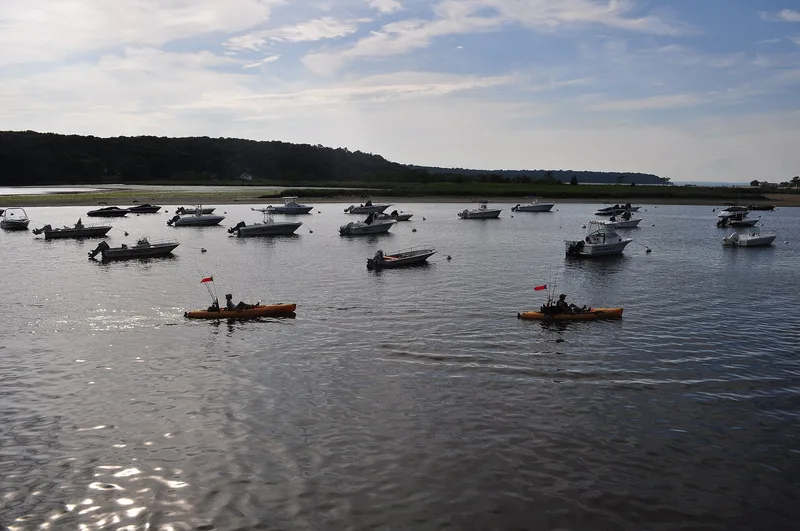
Cold Spring Harbor Laboratory occupies a long, narrow strip of land along the western shore of Cold Spring Harbor on Long Island's north shore, about fifty miles east of Manhattan. The district brings together three linked institutions: a fish hatchery begun around 1880, the Biological Laboratory founded in 1890, and the Carnegie Institution's Station for Experimental Evolution founded in 1904. The site was earlier used for manufacturing and whaling, and early science took place in adapted industrial and residential buildings. Researchers here contributed to the study of Mendelian inheritance, including George Shull's work on corn and the concept of hybrid vigor, which shaped modern agricultural breeding. The campus has no formal master plan; its buildings, many in a small-scale Long Island domestic style, were repeatedly altered as science changed. The district holds 31 contributing buildings and 2 contributing structures, with later postmodern buildings by Charles Moore counted as non-contributing because of their age.
Machine-generated summary. This summary was generated by a language model from the official nomination document and has not been reviewed line by line by an editor. It may contain errors. Check the source document before relying on any detail. Source: nomination document (PDF) · catalog entry. Generated October 2026 (model claude-sonnet-5-5, prompt v1.0-2026-10-29).
| Period of significance | 1880-1953 |
|---|---|
| Styles | Early Republic; Late Victorian; Late 19th and Early 20th Century Revivals; Modern; Postmodern |
| Areas of significance | Science, Conservation, Architecture |
| Acreage | 100 |
| Boundary source | NPS cultural-resource GIS polygon |
| Full listing page | Cold Spring Harbor Laboratory Historic District (property record) |
What listing means for this property
This is a historic district. Buildings within its boundary are either contributing (they add to the district's significance) or non-contributing. Owners of contributing income-producing buildings can claim the 20% federal rehabilitation tax credit; homeowners should look at state credits. National Register districts impose no design review by themselves; a local historic district ordinance, if one exists, does (the difference explained).
General information, not legal or tax advice. Rules change; confirm with your State Historic Preservation Office or a qualified adviser.