Cobleskill Historic District

Why it's listed
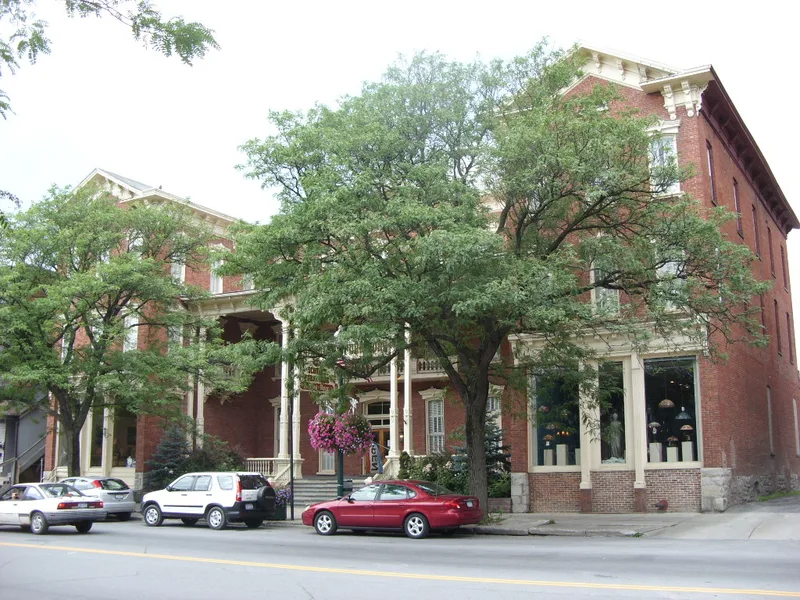
Cobleskill Historic District occupies the center of a village of about 5,000 people in Schoharie County, where Routes 7 and 10 cross as Main and Grand Streets. The district mixes shops, houses, churches, a railroad depot, an old school and a fairground. Its commercial focus includes the 1874 Italianate Hotel Augustan, a row of late 1860s brick storefronts, an 1871 firehouse and the 1802 Bull's Head Inn, the oldest building in the village. Nearby streets hold square Italianate villas, Queen Anne and Second Empire houses, board-and-batten Gothic cottages and a few Greek Revival buildings. Few have lost their original wood tracery, porch spindles, shingles and brackets to artificial siding. The 1900 railroad station and the fairgrounds add to the character of the area. The fairgrounds keep a complete set of late 19th-century stick-style exhibition buildings, barns and a grandstand. Modern intrusions and a fire-cleared lot detract in places, but the quality of the surviving buildings is the reason for the district's recognition.
Machine-generated summary. This summary was generated by a language model from the official nomination document and has not been reviewed line by line by an editor. It may contain errors. Check the source document before relying on any detail. Source: nomination document (PDF) · catalog entry. Generated October 2026 (model claude-sonnet-5-5, prompt v1.0-2026-10-29).
| Styles | Late 19th-century vernacular, including Italianate, Queen Anne, Stick, Second Empire, Gothic cottage and Greek Revival |
|---|---|
| Areas of significance | Commerce, Transportation, Architecture |
| Acreage | 92.5 |
| Boundary source | NPS cultural-resource GIS polygon |
| Full listing page | Cobleskill Historic District (property record) |
What listing means for this property
This is a historic district. Buildings within its boundary are either contributing (they add to the district's significance) or non-contributing. Owners of contributing income-producing buildings can claim the 20% federal rehabilitation tax credit; homeowners should look at state credits. National Register districts impose no design review by themselves; a local historic district ordinance, if one exists, does (the difference explained).
General information, not legal or tax advice. Rules change; confirm with your State Historic Preservation Office or a qualified adviser.