Cobblestone Historic District

Why it's listed
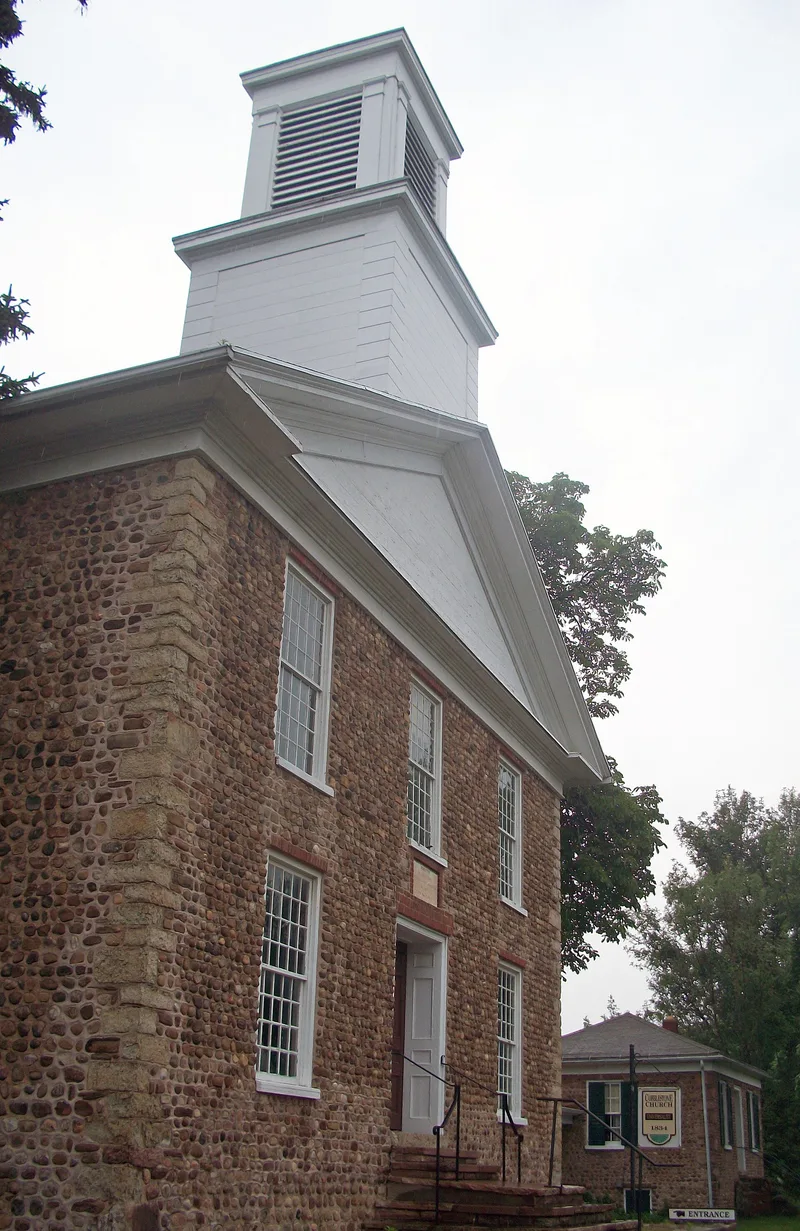
Three cobblestone buildings along Ridge Road in Childs, Orleans County, make up this district: a church, a small house, and a schoolhouse built between 1834 and 1849. The Universalist church, dated 1834, is Federal in style, with walls of glaciated field cobbles, limestone quoins, and a wooden tower rebuilt in 1966 from old photographs. Its interior retains original plaster, unusual papyrus-like gallery columns, and wood graining and a painted alcove added in 1874. The Ward House, built about 1840 and probably a parsonage, shows the Gaines Pattern of hexagonal cobble settings. The 1849 District 5 Schoolhouse is a Greek Revival building, a wooden structure with only a cobblestone veneer and a sloped classroom floor. The nomination presents cobblestone masonry as a distinctive vernacular craft of upstate New York and calls these three the best documented and best preserved early examples. The buildings now serve as a museum.
Machine-generated summary. This summary was generated by a language model from the official nomination document and has not been reviewed line by line by an editor. It may contain errors. Check the source document before relying on any detail. Source: nomination document (PDF) · catalog entry. Generated October 2026 (model claude-sonnet-5-5, prompt v1.0-2026-10-29).
| Period of significance | 1834, c. 1840, 1849 |
|---|---|
| Styles | Other: Cobblestone (Federal church and Ward House; Greek Revival schoolhouse) |
| Areas of significance | Architecture |
| Acreage | 0.9 |
| Boundary source | NPS cultural-resource GIS polygon |
| Full listing page | Cobblestone Historic District (property record) |
What listing means for this property
This is a historic district. Buildings within its boundary are either contributing (they add to the district's significance) or non-contributing. Owners of contributing income-producing buildings can claim the 20% federal rehabilitation tax credit; homeowners should look at state credits. National Register districts impose no design review by themselves; a local historic district ordinance, if one exists, does (the difference explained).
General information, not legal or tax advice. Rules change; confirm with your State Historic Preservation Office or a qualified adviser.