Closter Road-Oak Tree Road Historic District

Why it's listed
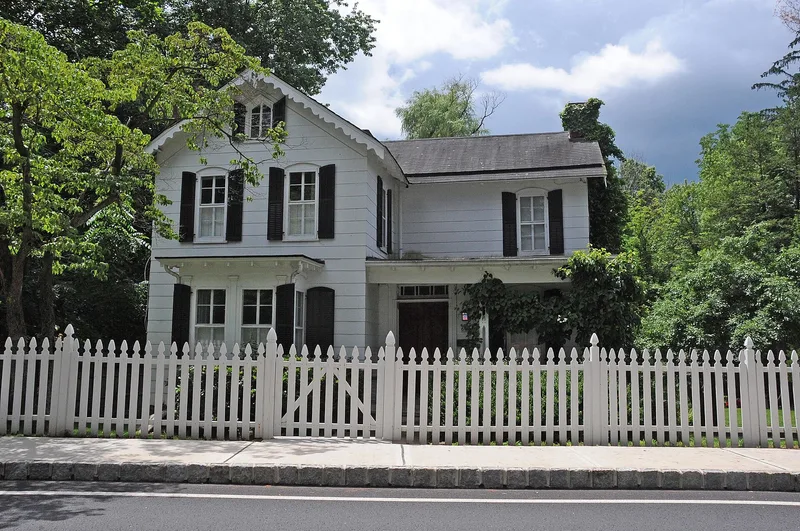
Along one block of Closter Road and one block of Oak Tree Road, the district preserves the core of the upland crossroads community in the hamlet of Palisades, Rockland County. Its 19 properties include mostly frame houses, a former Methodist Episcopal church of 1859, a former schoolhouse now a community center, two commercial buildings and a burying ground with graves dating from 1774. The buildings date from about 1780 to 1910 and show a progression of styles: vernacular Georgian, Greek Revival, Gothic Revival and Italianate. The c.1780 Trenchard House is one of the few surviving eighteenth-century farmhouses in the area and shows English rather than Dutch building influences. The c.1840 country store is the oldest surviving commercial building in the surrounding resource area. Settled as farmland, the area grew into a middle-class neighborhood of merchants, craftsmen and tradesmen once railroads opened and New Yorkers came for summer homes. Level terrain gave regular siting and unified streetscapes that keep a nineteenth-century character.
Machine-generated summary. This summary was generated by a language model from the official nomination document and has not been reviewed line by line by an editor. It may contain errors. Check the source document before relying on any detail. Source: nomination document (PDF) · catalog entry. Generated October 2026 (model claude-sonnet-5-5, prompt v1.0-2026-10-29).
| Period of significance | c.1780-1910 |
|---|---|
| Styles | Vernacular Georgian, Greek Revival, Gothic Revival and Italianate |
| Areas of significance | Exploration/Settlement, Architecture |
| Acreage | 10.5 |
| Boundary source | NPS cultural-resource GIS polygon |
| Full listing page | Closter Road-Oak Tree Road Historic District (property record) |
What listing means for this property
This is a historic district. Buildings within its boundary are either contributing (they add to the district's significance) or non-contributing. Owners of contributing income-producing buildings can claim the 20% federal rehabilitation tax credit; homeowners should look at state credits. National Register districts impose no design review by themselves; a local historic district ordinance, if one exists, does (the difference explained).
General information, not legal or tax advice. Rules change; confirm with your State Historic Preservation Office or a qualified adviser.