Clarkson Corners Historic District

Why it's listed
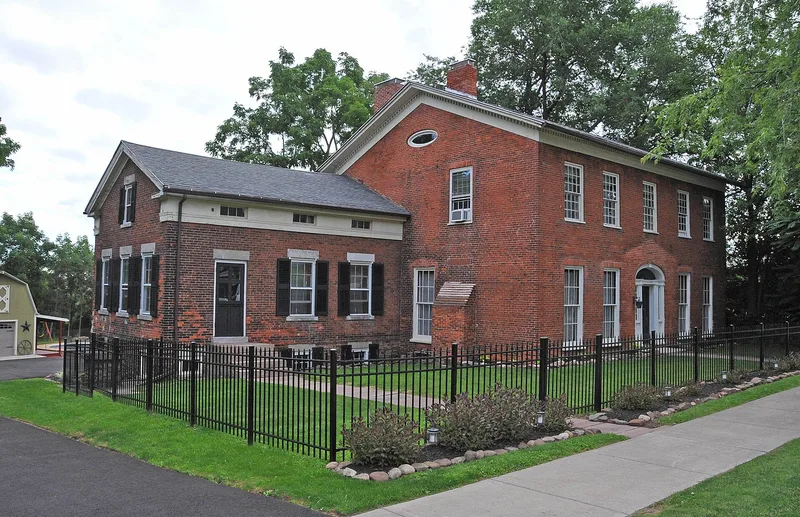
Clarkson Corners is a crossroads hamlet west of Rochester, New York, where Ridge Road and Lake Road meet. The historic district follows a T-shaped plan and holds about sixty historic buildings built between about 1804 and 1910, mostly brick or frame houses of one or two stories with gable roofs. A Congregational church (1825), the Greek Revival Clarkson Academy (c1853) and the 1899 town hall are also included. The oldest building is the Abel Baldwin House, a former tavern from about 1804. The hamlet grew around two early roads and a mill stream, and the nearby Erie Canal at Brockport later encouraged more growth. It was largely built out by about 1872. Federal and Greek Revival houses stand close to modest workers' homes, reflecting a mix of professionals and laborers. Lot lines and building footprints have changed little since the nineteenth century, and the hamlet remains distinct from the larger community of Brockport one mile south.
Machine-generated summary. This summary was generated by a language model from the official nomination document and has not been reviewed line by line by an editor. It may contain errors. Check the source document before relying on any detail. Source: nomination document (PDF) · catalog entry. Generated October 2026 (model claude-sonnet-5-5, prompt v1.0-2026-10-29).
| Styles | Early Republic (Federal); Mid-nineteenth century (Greek Revival); Late Victorian |
|---|---|
| Areas of significance | Architecture |
| Acreage | 45 |
| Boundary source | NPS cultural-resource GIS polygon |
| Full listing page | Clarkson Corners Historic District (property record) |
What listing means for this property
This is a historic district. Buildings within its boundary are either contributing (they add to the district's significance) or non-contributing. Owners of contributing income-producing buildings can claim the 20% federal rehabilitation tax credit; homeowners should look at state credits. National Register districts impose no design review by themselves; a local historic district ordinance, if one exists, does (the difference explained).
General information, not legal or tax advice. Rules change; confirm with your State Historic Preservation Office or a qualified adviser.