Chelsea Historic District (Boundary Increase)
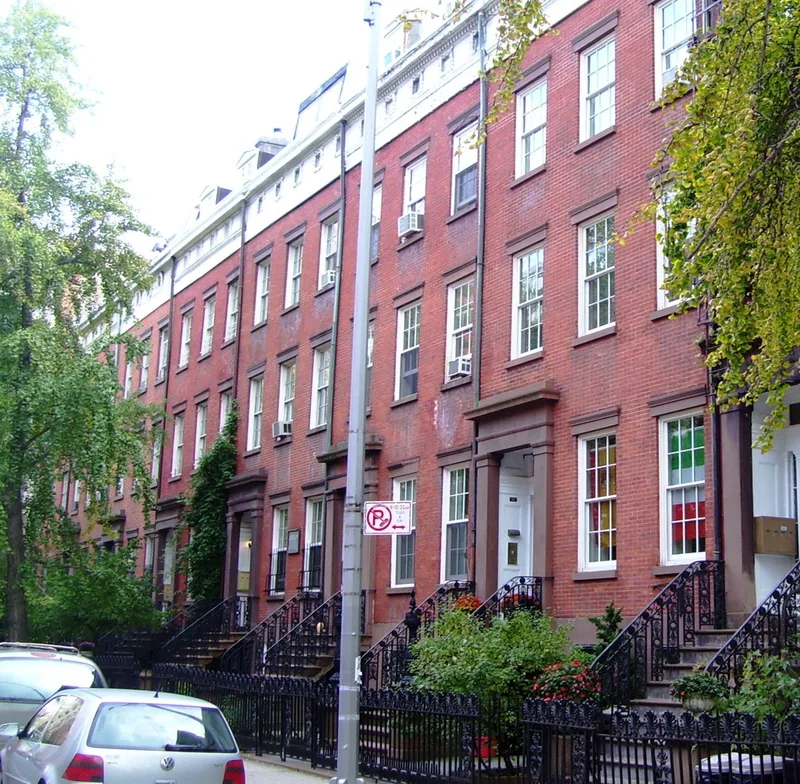

Why it's listed
This expansion of the Chelsea Historic District in Manhattan adds about four blocks of mainly residential buildings between Eighth and Tenth Avenues and West 22nd and West 23rd Streets. Most were built between 1836 and 1874 as part of the neighborhood Clement Clarke Moore began developing on his Chelsea estate in 1835. Covenants controlled building dimensions, materials and quality, producing varied detail within a harmonious streetscape. The area includes Greek Revival rowhouses on West 22nd Street, a nearly unbroken row of Anglo-Italianate houses on the north side of that street, and the Italianate mansions of West 23rd Street known as Millionaire's Row, whose stoops were removed in 1929. Neo-Grec and Second Empire buildings, an 1897 neo-Gothic Lutheran church, a 1918 apartment building and the 1930 Art Deco Empire Diner also contribute. A 1963-64 apartment tower is the only intrusion. The addition also matched the larger boundary the city's Landmarks Preservation Commission had already designated.
Machine-generated summary. This summary was generated by a language model from the official nomination document and has not been reviewed line by line by an editor. It may contain errors. Check the source document before relying on any detail. Source: nomination document (PDF) · catalog entry. Generated October 2026 (model claude-sonnet-5-5, prompt v1.0-2026-10-29).
| Period of significance | 1836-1875 |
|---|---|
| Styles | Greek Revival, Italianate, Anglo-Italianate, neo-Grec, French Second Empire |
| Areas of significance | Community Planning and Development, Architecture |
| Acreage | 25 |
| Boundary source | NPS cultural-resource GIS polygon |
| Full listing page | Chelsea Historic District (Boundary Increase) (property record) |
What listing means for this property
This is a historic district. Buildings within its boundary are either contributing (they add to the district's significance) or non-contributing. Owners of contributing income-producing buildings can claim the 20% federal rehabilitation tax credit; homeowners should look at state credits. National Register districts impose no design review by themselves; a local historic district ordinance, if one exists, does (the difference explained).
General information, not legal or tax advice. Rules change; confirm with your State Historic Preservation Office or a qualified adviser.