Chelsea Historic District

Why it's listed
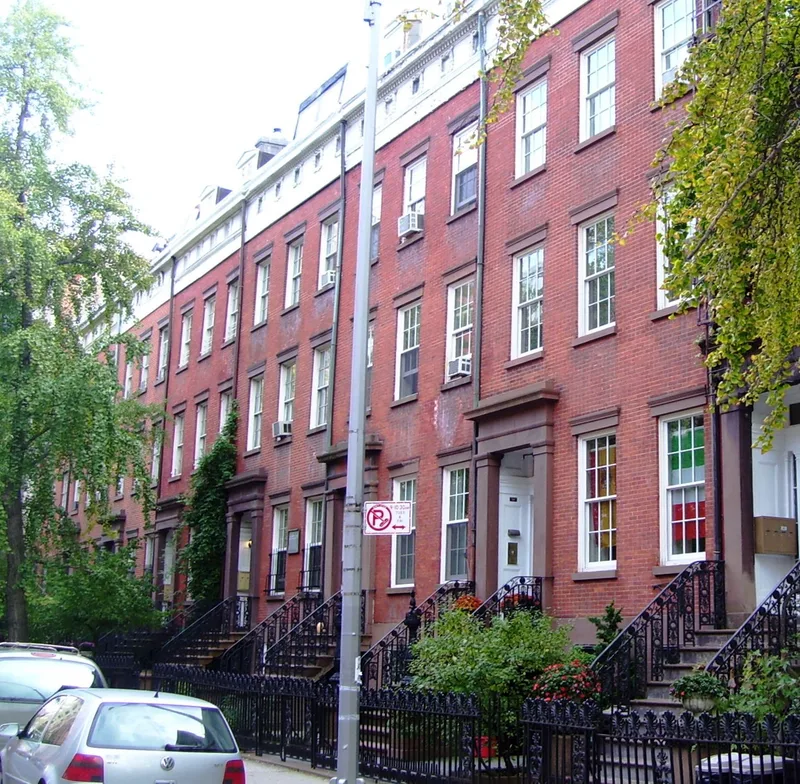
Chelsea Historic District is a residential neighborhood in Manhattan, mostly along West 20th to West 22nd Streets between 9th and 10th Avenues. Its rows of Greek Revival and Italianate houses were built chiefly from 1830 over about three decades, with a few earlier Federal houses. The land came to Clement Clarke Moore, author of "A Visit from St. Nicholas," who planned it as an elegant residential area. Covenants in lot sales required fireproof houses, ten-foot front yards, and a ban on stables and manufactories. The results include Cushman Row, seven Greek Revival houses with detailed ironwork, and Italianate brownstones on West 21st Street. St. Peter's Church and the General Theological Seminary, with its landscaped campus, add Gothic character. The neighborhood stayed middle-class rather than fashionable, but its architecture remained consistently high in quality. The district was recognized for this unusual planning and the homogeneity of its streetscapes.
Machine-generated summary. This summary was generated by a language model from the official nomination document and has not been reviewed line by line by an editor. It may contain errors. Check the source document before relying on any detail. Source: nomination document (PDF) · catalog entry. Generated October 2026 (model claude-sonnet-5-5, prompt v1.0-2026-10-29).
| Period of significance | 19th Century |
|---|---|
| Styles | Greek Revival, Italianate, Federal, Gothic Revival |
| Areas of significance | Architecture |
| Acreage | 14 |
| Boundary source | NPS cultural-resource GIS polygon |
| Full listing page | Chelsea Historic District (property record) |
What listing means for this property
This is a historic district. Buildings within its boundary are either contributing (they add to the district's significance) or non-contributing. Owners of contributing income-producing buildings can claim the 20% federal rehabilitation tax credit; homeowners should look at state credits. National Register districts impose no design review by themselves; a local historic district ordinance, if one exists, does (the difference explained).
General information, not legal or tax advice. Rules change; confirm with your State Historic Preservation Office or a qualified adviser.