Central Troy Historic District

Why it's listed
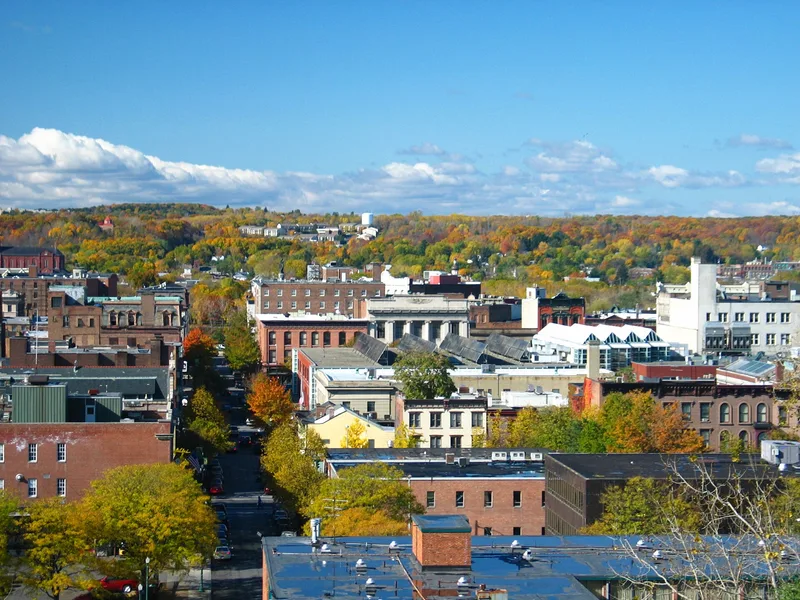
Central Troy Historic District covers roughly 96 acres at the heart of Troy, New York, on the east bank of the Hudson River just below its meeting with the Mohawk. It takes in the downtown commercial core and surrounding residential streets, with 679 contributing features built between 1787 and about 1940, mostly of brick. The district merges five earlier historic districts with the buildings between them. River Street's warehouses, rebuilt after the 1820 fire, reflect Troy's role as a river trade center. Monument Square and the banking blocks of First Street show later commercial growth, with buildings such as the Cannon Building, the Rice Building and the McCarthy Building. Residential blocks, including Second Street and the Washington Park area, display Federal, Greek Revival, Italianate, Gothic Revival and Queen Anne houses built for merchants, industrialists and middle-class residents. The boundaries separate this concentration of intact buildings from altered or modern surroundings.
Machine-generated summary. This summary was generated by a language model from the official nomination document and has not been reviewed line by line by an editor. It may contain errors. Check the source document before relying on any detail. Source: nomination document (PDF) · catalog entry. Generated October 2026 (model claude-sonnet-5-5, prompt v1.0-2026-10-29).
| Period of significance | 1787-1940 |
|---|---|
| Styles | Diverse styles including Federal, Greek Revival, Italianate, Gothic Revival, Queen Anne, Romanesque Revival, High Victorian Gothic, Renaissance Revival and Colonial Revival |
| Areas of significance | Industry, Community Planning and Development, Commerce, Transportation, Education, Architecture |
| Acreage | 96 |
| Boundary source | NPS cultural-resource GIS polygon |
| Full listing page | Central Troy Historic District (property record) |
What listing means for this property
This is a historic district. Buildings within its boundary are either contributing (they add to the district's significance) or non-contributing. Owners of contributing income-producing buildings can claim the 20% federal rehabilitation tax credit; homeowners should look at state credits. National Register districts impose no design review by themselves; a local historic district ordinance, if one exists, does (the difference explained).
General information, not legal or tax advice. Rules change; confirm with your State Historic Preservation Office or a qualified adviser.