Central Ridgewood Historic District

Why it's listed
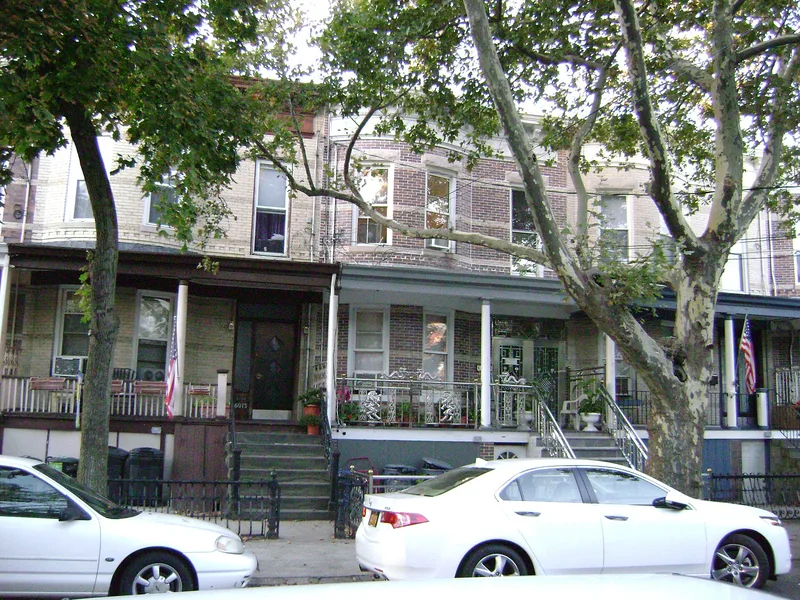
Central Ridgewood is a 56-acre part of Queens, New York City, covering all or part of 23 blocks north of Myrtle Avenue and west of Fresh Pond Road. Its 782 structures, built between about 1895 and 1927, are mostly two-story brick row houses with one apartment per floor and bay fronts that rise the full height of each building. Most bays are round, some are box-shaped, and speckled brick in amber, orange, red and brown adds variety along the rows. Brownstone stoops, cast-stone lintels, pressed metal cornices and iron gates are common details. Louis Berger and Co. designed nearly every row, and builder Paul Stier erected some of the most notable ones in 1908 and 1909, including rows with columned wooden porches on 69th and 70th Avenues. Covenant Lutheran Church, a Gothic Revival building of 1914 by Carl L. Otto, also stands within the district. It was listed for its intact plan, scale and design and for its link to the German immigrants who developed the neighborhood.
Machine-generated summary. This summary was generated by a language model from the official nomination document and has not been reviewed line by line by an editor. It may contain errors. Check the source document before relying on any detail. Source: nomination document (PDF) · catalog entry. Generated October 2026 (model claude-sonnet-5-5, prompt v1.0-2026-10-29).
| Period of significance | c. 1895-1927 |
|---|---|
| Styles | Applied Romanesque Revival and Renaissance Revival detailing; Gothic Revival (Covenant Lutheran Church) |
| Areas of significance | Architecture |
| Acreage | 56 |
| Boundary source | NPS cultural-resource GIS polygon |
| Full listing page | Central Ridgewood Historic District (property record) |
What listing means for this property
This is a historic district. Buildings within its boundary are either contributing (they add to the district's significance) or non-contributing. Owners of contributing income-producing buildings can claim the 20% federal rehabilitation tax credit; homeowners should look at state credits. National Register districts impose no design review by themselves; a local historic district ordinance, if one exists, does (the difference explained).
General information, not legal or tax advice. Rules change; confirm with your State Historic Preservation Office or a qualified adviser.