Cedarmere-Clayton Estates

Why it's listed
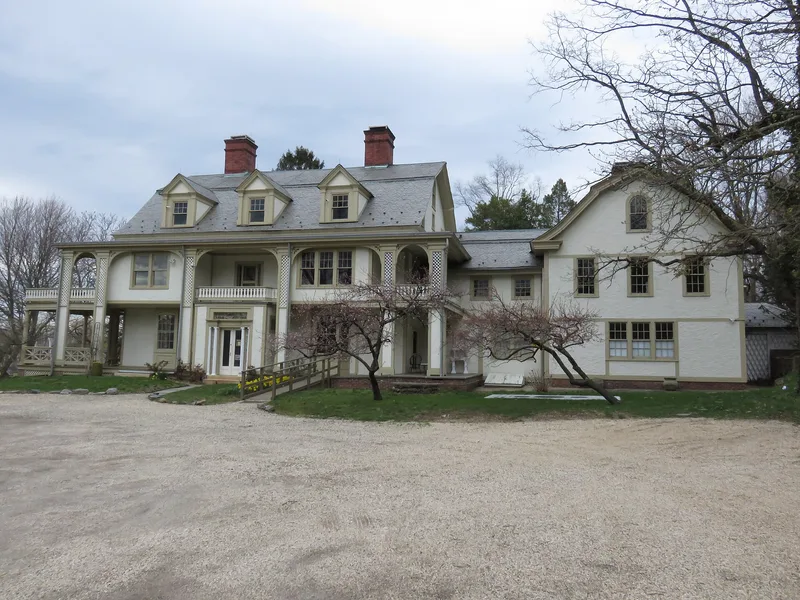
Two neighboring estates on Hempstead Harbor in Roslyn Harbor, Long Island, make up this district. Cedarmere, on seven acres, was the country retreat of poet and newspaper editor William Cullen Bryant, who bought an older farmstead in 1843 and spent decades enlarging it. Its main house shows a neo-Colonial look with gambrel roofs and a wraparound porch, and its 1850 Gothic Revival mill and pond landscape, designed by Frederick Law Olmsted, remain. Across Bryant Avenue lies Clayton, a 165-acre estate where the Bryce family built a brick Georgian Revival mansion designed by Ogden Codman, Jr. After Henry Clay Frick bought the property in 1919, architects Charles Allom, Guy Lowell and Henry Milliken reworked buildings, and Marian Coffin redesigned the gardens. Together the estates contain seven contributing buildings and nine contributing structures. They show how a quiet farming village became a community of wealthy country retreats over ninety years, and they connect to many notable figures in American art and letters.
Machine-generated summary. This summary was generated by a language model from the official nomination document and has not been reviewed line by line by an editor. It may contain errors. Check the source document before relying on any detail. Source: nomination document (PDF) · catalog entry. Generated October 2026 (model claude-sonnet-5-5, prompt v1.0-2026-10-29).
| Period of significance | early 1840's-early 1930's |
|---|---|
| Styles | Colonial Revival (Cedarmere house); Gothic Revival (mill); Georgian Revival (Clayton mansion and gatehouse) |
| Areas of significance | Landscape Architecture, Literature, Architecture |
| Acreage | 172 |
| Boundary source | NPS cultural-resource GIS polygon |
| Full listing page | Cedarmere-Clayton Estates (property record) |
What listing means for this property
This is a historic district. Buildings within its boundary are either contributing (they add to the district's significance) or non-contributing. Owners of contributing income-producing buildings can claim the 20% federal rehabilitation tax credit; homeowners should look at state credits. National Register districts impose no design review by themselves; a local historic district ordinance, if one exists, does (the difference explained).
General information, not legal or tax advice. Rules change; confirm with your State Historic Preservation Office or a qualified adviser.