Casino-Congress Park-Circular Street Historic District

Why it's listed
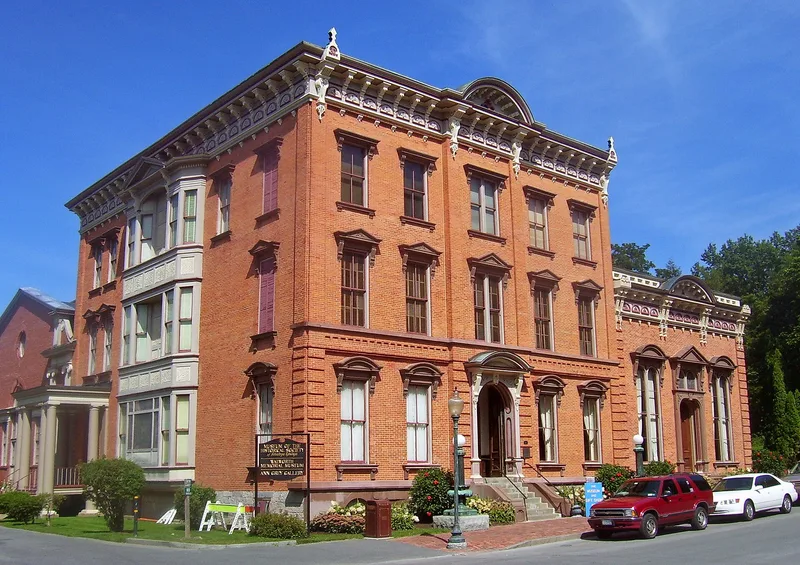
Congress Park and its surroundings in Saratoga Springs form a district of about 43 acres, centered on the Canfield Casino, the landscaped park around it, and ten nineteenth-century buildings along Circular Street. The park holds paths, lawns, Italian gardens, fountains and Grecian spring pavilions, including the Spirit of Life fountain. The brick Casino was built in 1867 to 1869, with a large dining room and kitchen added in 1903 to designs by Clarence Luce. John Morrissey established its reputation as a gambling house, and Richard Canfield later ran it, drawing wealthy families and entertainers. Congress Spring, developed by Dr. John Clarke, produced bottled water sold worldwide. Clarke also laid out Circular Street and built the Greek Revival house at number 46. The street's houses, mostly from the 1870s, show a lively mix of architectural treatments. Together these sites record Saratoga Springs' fame as a health resort and gambling center.
Machine-generated summary. This summary was generated by a language model from the official nomination document and has not been reviewed line by line by an editor. It may contain errors. Check the source document before relying on any detail. Source: nomination document (PDF) · catalog entry. Generated October 2026 (model claude-sonnet-5-5, prompt v1.0-2026-10-29).
| Styles | Greek Revival (#46 Circular Street); varied 19th-century styles including Italianate-type brick Casino with pediments and bracketed cornice |
|---|---|
| Areas of significance | Community Planning and Development, Architecture, Social History |
| Acreage | 33 |
| Boundary source | NPS cultural-resource GIS polygon |
| Full listing page | Casino-Congress Park-Circular Street Historic District (property record) |
What listing means for this property
This is a historic district. Buildings within its boundary are either contributing (they add to the district's significance) or non-contributing. Owners of contributing income-producing buildings can claim the 20% federal rehabilitation tax credit; homeowners should look at state credits. National Register districts impose no design review by themselves; a local historic district ordinance, if one exists, does (the difference explained).
General information, not legal or tax advice. Rules change; confirm with your State Historic Preservation Office or a qualified adviser.