Caramoor

Why it's listed
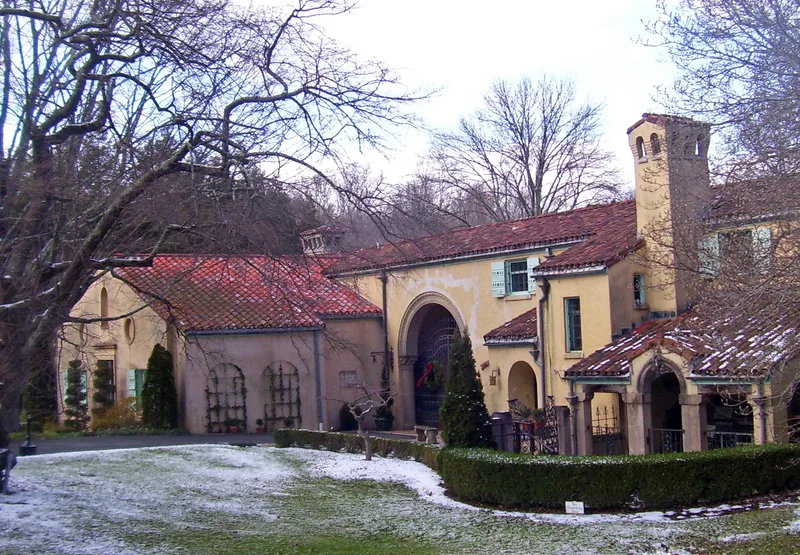
Caramoor is an 80-acre estate in Bedford, Westchester County, New York, now home to the Caramoor Center for Music and the Arts. Its centerpiece is a sprawling stucco villa with a red tile roof and a central courtyard, built between 1929 and 1939 for financier and art patron Walter Rosen and his wife Lucie. Rosen designed the house with architect Christian Rosborg and other designers. Inside, many first-floor rooms incorporate paneling, ceilings and other elements brought from England, France, Italy and Spain, alongside modern conveniences such as a large kitchen, many bathrooms and a basement garage. The grounds include a 1912 sunken garden, an 18th-century Swiss iron gate, a tennis pavilion, a dovecote and several service buildings in matching style. The Rosens gave the estate to a private foundation, and the Venetian Theater was added in 1958 as a summer music venue. The property was listed for its architecture and its exceptionally intact interiors.
Machine-generated summary. This summary was generated by a language model from the official nomination document and has not been reviewed line by line by an editor. It may contain errors. Check the source document before relying on any detail. Source: nomination document (PDF) · catalog entry. Generated October 2026 (model claude-sonnet-5-5, prompt v1.0-2026-10-29).
| Period of significance | 1912-39 |
|---|---|
| Styles | Late 19th & 20th Century Revivals: Mediterranean Revival |
| Areas of significance | Architecture |
| Acreage | 80.9 |
| Boundary source | NPS cultural-resource GIS polygon |
| Full listing page | Caramoor (property record) |
What listing means for this property
This is a historic district. Buildings within its boundary are either contributing (they add to the district's significance) or non-contributing. Owners of contributing income-producing buildings can claim the 20% federal rehabilitation tax credit; homeowners should look at state credits. National Register districts impose no design review by themselves; a local historic district ordinance, if one exists, does (the difference explained).
General information, not legal or tax advice. Rules change; confirm with your State Historic Preservation Office or a qualified adviser.