Camp Quinipet

Why it's listed
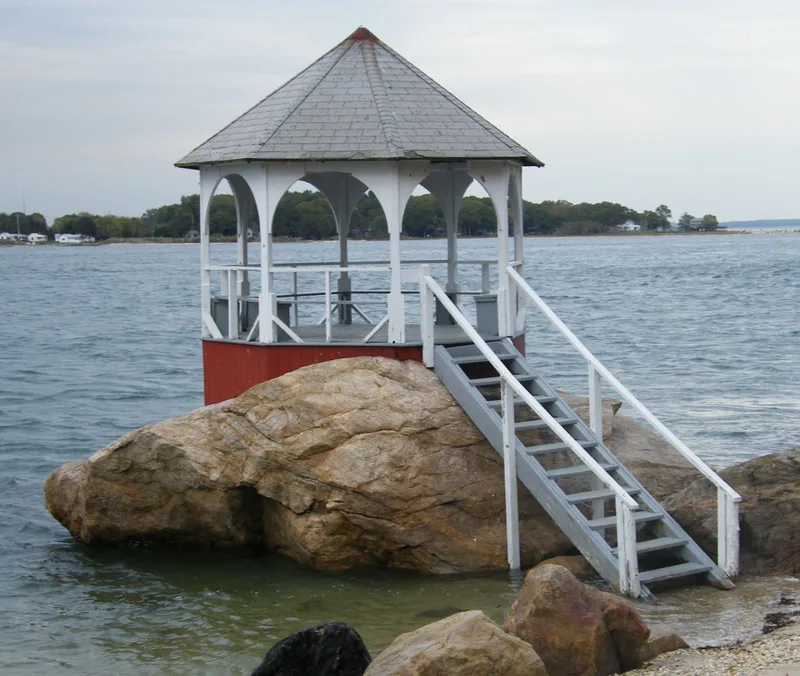
Camp Quinipet occupies all of Jennings Point, also called Stearns Point, on the northwest end of Shelter Island. The camp covers just under 26 acres and holds 16 contributing resources and six non-contributing ones. Its oldest building is a ferryman's house of about 1830, later used as a farmhouse and now the infirmary, with a late nineteenth-century bank barn nearby. Two Shingle-style cottages and an 1906 gazebo remain from the Stearns family estate. The camp was founded in 1922 with a military-style layout. After the Methodist conference bought it in 1947, it adopted a topographical plan, with cabins, a dining hall, Wesley Hall and a hillside chapel built between about 1947 and 1955. Five boulders on the site give the camp its name. The property is significant for the history of summer resort use on the island and as an example of organized children's camping and mid-twentieth-century camp planning, owned by a religious institution.
Machine-generated summary. This summary was generated by a language model from the official nomination document and has not been reviewed line by line by an editor. It may contain errors. Check the source document before relying on any detail. Source: nomination document (PDF) · catalog entry. Generated October 2026 (model claude-sonnet-5-5, prompt v1.0-2026-10-29).
| Period of significance | Ca. 1830-1955 |
|---|---|
| Styles | Mixed (including vernacular Greek Revival, Shingle style, and rustic camp buildings) |
| Areas of significance | Social History, Entertainment/Recreation, Architecture |
| Acreage | 25.7 |
| Boundary source | NPS cultural-resource GIS polygon |
| Full listing page | Camp Quinipet (property record) |
What listing means for this property
This is a historic district. Buildings within its boundary are either contributing (they add to the district's significance) or non-contributing. Owners of contributing income-producing buildings can claim the 20% federal rehabilitation tax credit; homeowners should look at state credits. National Register districts impose no design review by themselves; a local historic district ordinance, if one exists, does (the difference explained).
General information, not legal or tax advice. Rules change; confirm with your State Historic Preservation Office or a qualified adviser.