Camp Dudley Road Historic District

Why it's listed
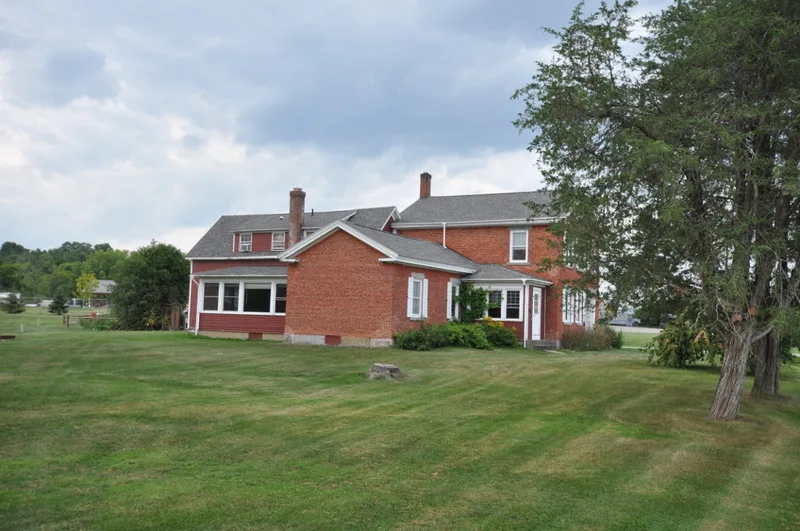
Camp Dudley Road Historic District covers roughly 1,050 acres in southeastern Westport, New York, bounded by Lake Champlain, Route 9N/22, the Westport village line and Stacey Brook. Open farmland divided by hedgerows and dotted with farm complexes recalls 19th-century settlement. Brick Greek Revival, stone Federal and Italianate farmhouses, along with the 1816 limestone schoolhouse, represent the early period. Along the shore, estates, inns and modest camps show how the area became a summer destination after the railroad arrived in 1876. Highlights include the Skenewood estate, the Prairie-style Kenjockety camp, a cluster of c.1935 Frisbie Lane camps, and the 1873 Barber Point Lighthouse, built by the Army Corps of Engineers. Camp Dudley, on 250 acres at the south end, is described as the oldest boys' camp in continuous operation in the United States. Of 177 properties, 133 contribute to the district's historic character, which reflects a succession from farming to recreation.
Machine-generated summary. This summary was generated by a language model from the official nomination document and has not been reviewed line by line by an editor. It may contain errors. Check the source document before relying on any detail. Source: nomination document (PDF) · catalog entry. Generated October 2026 (model claude-sonnet-5-5, prompt v1.0-2026-10-29).
| Styles | Greek Revival; Second Empire/Italianate; Colonial Revival; Prairie School |
|---|---|
| Areas of significance | Agriculture, Entertainment/Recreation, Architecture |
| Acreage | 1050 |
| Boundary source | NPS cultural-resource GIS polygon |
| Full listing page | Camp Dudley Road Historic District (property record) |
What listing means for this property
This is a historic district. Buildings within its boundary are either contributing (they add to the district's significance) or non-contributing. Owners of contributing income-producing buildings can claim the 20% federal rehabilitation tax credit; homeowners should look at state credits. National Register districts impose no design review by themselves; a local historic district ordinance, if one exists, does (the difference explained).
General information, not legal or tax advice. Rules change; confirm with your State Historic Preservation Office or a qualified adviser.