Cambridge Historic District

Why it's listed
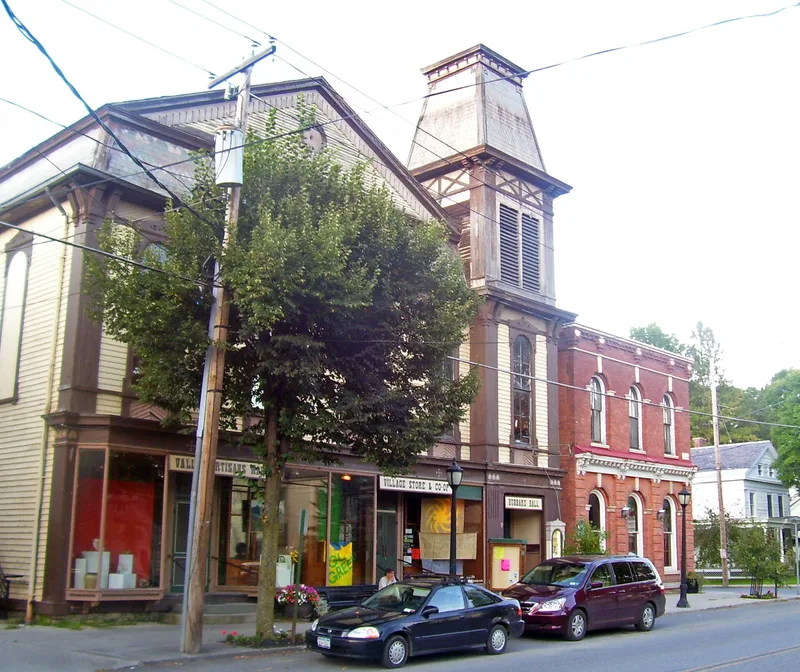
Cambridge is a village of about 1,800 people in lower Washington County, New York, laid out along the Owl Kill creek where three crossroads hamlets merged. Its historic district holds roughly 240 primary buildings, mostly frame houses on generous, shaded lots, with a commercial core of late 19th-century stores along Main Street. About twenty homes show Federal period character, including the Dorr-Randall house, and about sixty display Greek Revival pedimented gables and pilasters. Later styles appear in the Italianate Cambridge Hotel, the Second Empire house at 12 Broad Street, the Queen Anne house at 44 West Main, the Stick-style St. Luke's Church and the Classical Revival Rice Mansion. Other features include the railroad station, the Old Opera House, a print shop, a mill with a covered footbridge and a small cemetery. The architectural details of most buildings remain intact. Sixteen modern buildings are counted as intrusions, and 28 buildings are noted as possible individual nominations.
Machine-generated summary. This summary was generated by a language model from the official nomination document and has not been reviewed line by line by an editor. It may contain errors. Check the source document before relying on any detail. Source: nomination document (PDF) · catalog entry. Generated October 2026 (model claude-sonnet-5-5, prompt v1.0-2026-10-29).
| Styles | Mixed 19th-century village architecture: Federal, Greek Revival, Italianate, Second Empire, Queen Anne, Stick, Rural Gothic and Classical Revival |
|---|---|
| Areas of significance | Commerce, Architecture |
| Acreage | 105 |
| Boundary source | NPS cultural-resource GIS polygon |
| Full listing page | Cambridge Historic District (property record) |
What listing means for this property
This is a historic district. Buildings within its boundary are either contributing (they add to the district's significance) or non-contributing. Owners of contributing income-producing buildings can claim the 20% federal rehabilitation tax credit; homeowners should look at state credits. National Register districts impose no design review by themselves; a local historic district ordinance, if one exists, does (the difference explained).
General information, not legal or tax advice. Rules change; confirm with your State Historic Preservation Office or a qualified adviser.