Byrdcliffe Historic District

Why it's listed
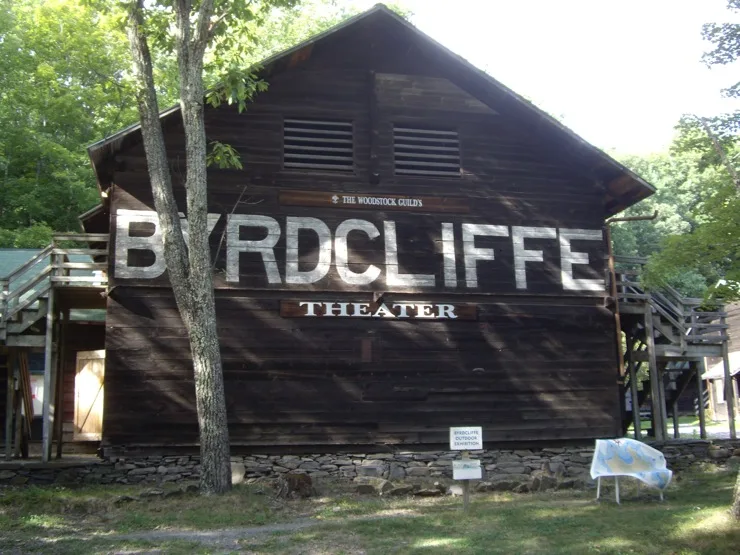
Byrdcliffe is an arts and crafts colony on the southeast slope of a spur of Overlook Mountain in Woodstock, New York. Ralph Radcliffe Whitehead, an Anglo-American admirer of John Ruskin, founded it in 1902-1903 and chose Woodstock after a long search. The colony once covered about twelve hundred acres, with a surrounding buffer of farm and woodland meant to protect the landscape. The nominated district keeps the core community, with fifty-three buildings. Bolton Brown drew the plans to Whitehead's instructions. The buildings show a restrained Western Stick style with Swiss or Styrian touches such as broad gables, balconies, exposed timbers and wide roofs. Key buildings include White Pines, the Villetta boarding house, the Byrdcliffe Studio, the barn and the Lark's Nest, a converted farmhouse that hosted thinkers such as John Dewey. The colony never fully achieved its founder's economic aims, yet it led to the Woodstock art colony and the Maverick Festivals. Its surviving buildings record that movement.
Machine-generated summary. This summary was generated by a language model from the official nomination document and has not been reviewed line by line by an editor. It may contain errors. Check the source document before relying on any detail. Source: nomination document (PDF) · catalog entry. Generated October 2026 (model claude-sonnet-5-5, prompt v1.0-2026-10-29).
| Styles | Western Stick style with Swiss/Alpine chalet decorative features, combined with arts and crafts influences |
|---|---|
| Areas of significance | Community Planning and Development, Art, Conservation, Education, Architecture, Performing Arts |
| Acreage | 188 |
| Boundary source | NPS cultural-resource GIS polygon |
| Full listing page | Byrdcliffe Historic District (property record) |
What listing means for this property
This is a historic district. Buildings within its boundary are either contributing (they add to the district's significance) or non-contributing. Owners of contributing income-producing buildings can claim the 20% federal rehabilitation tax credit; homeowners should look at state credits. National Register districts impose no design review by themselves; a local historic district ordinance, if one exists, does (the difference explained).
General information, not legal or tax advice. Rules change; confirm with your State Historic Preservation Office or a qualified adviser.