Browncroft Historic District

Why it's listed
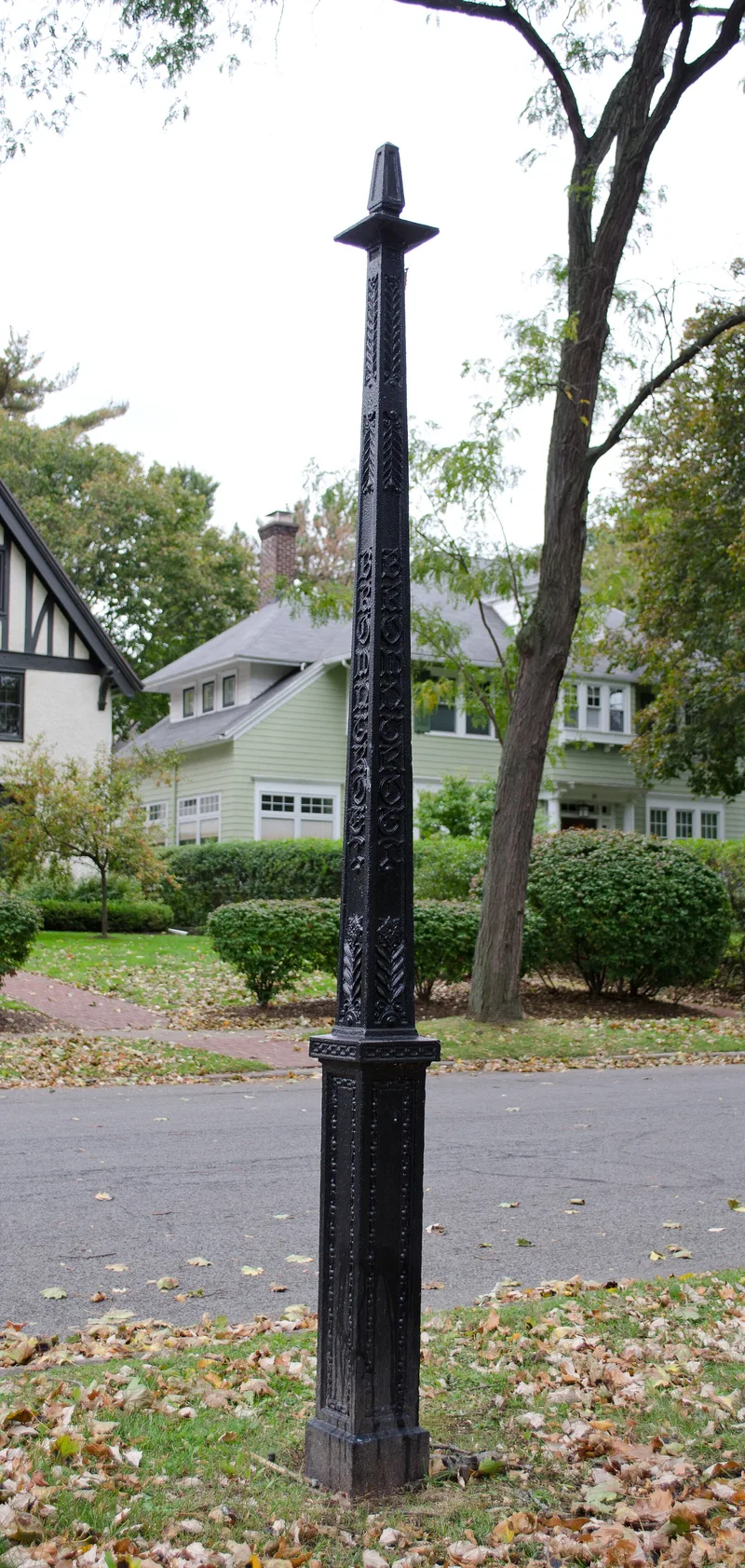
Browncroft is a planned residential neighborhood in southeast Rochester, about three miles from downtown. Its 12 streets were laid out as a subdivision beginning in 1914, on land that had earlier been farms and then a commercial nursery. The district holds 524 contributing resources, mostly large single-family houses and rear garages built between about 1914 and 1929 in Colonial Revival, Tudor Revival, Craftsman, Prairie and related styles. Some were designed by the local firm Gordon & Kaelber, and a block of Browncroft Boulevard was built by Cusamano around 1929. Four older vernacular farmhouses recall the area's agricultural past. The neighborhood is also valued for its designed landscape: broad planting strips, rows of Norway maples, flowering shrubs, sandstone curbs, brick front walks, deep setbacks and concrete streetlights. Two churches, a public elementary school and a small rose garden complete the district. Together these features show how a nursery business became a cohesive early twentieth century suburb.
Machine-generated summary. This summary was generated by a language model from the official nomination document and has not been reviewed line by line by an editor. It may contain errors. Check the source document before relying on any detail. Source: nomination document (PDF) · catalog entry. Generated October 2026 (model claude-sonnet-5-5, prompt v1.0-2026-10-29).
| Styles | Colonial Revival, Tudor Revival, Dutch Colonial Revival, Craftsman, Prairie, Arts and Crafts, Spanish Colonial, with mid-19th century farmhouses |
|---|---|
| Areas of significance | Architecture, Community Planning and Development, Landscape Architecture |
| Acreage | 116 |
| Boundary source | NPS cultural-resource GIS polygon |
| Full listing page | Browncroft Historic District (property record) |
What listing means for this property
This is a historic district. Buildings within its boundary are either contributing (they add to the district's significance) or non-contributing. Owners of contributing income-producing buildings can claim the 20% federal rehabilitation tax credit; homeowners should look at state credits. National Register districts impose no design review by themselves; a local historic district ordinance, if one exists, does (the difference explained).
General information, not legal or tax advice. Rules change; confirm with your State Historic Preservation Office or a qualified adviser.