Broadway Historic District (Boundary Increase II)
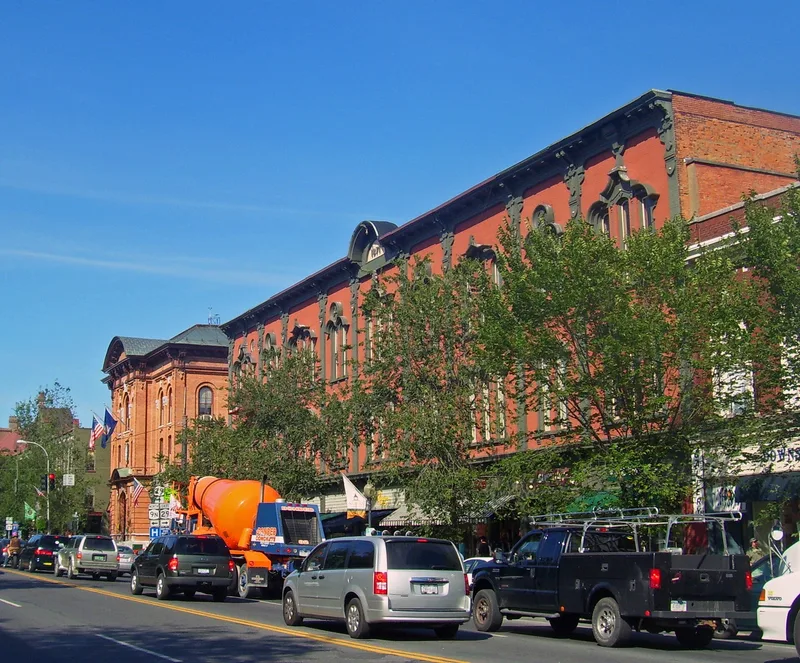

Why it's listed
This boundary increase extends Saratoga Springs' Broadway Historic District into the northwest, where wealthy visitors and residents built summer houses at the turn of the century. Much of the added land was once "Woodlawn," a large country seat established by Henry Walton and later enlarged by Judge Henry Hilton, owner of the United States Hotel. Houses were built around its entrances and southern edge so owners could look over its parkland. Three groups of houses appeared along Clement Avenue, Clinton Street and State Street, including Shingle Style mansions and the Queen Anne house "Annandale," many with carriage houses. The estate was cleared in the 1970s and is now Skidmore College's campus, but the houses and lots remain largely intact. The increase also adds smaller summer houses on Woodlawn and Greenfield Avenues and four nineteenth-century stables and liveries on Long Alley that served Broadway businesses. It adds 34 contributing and 7 noncontributing properties.
Machine-generated summary. This summary was generated by a language model from the official nomination document and has not been reviewed line by line by an editor. It may contain errors. Check the source document before relying on any detail. Source: nomination document (PDF) · catalog entry. Generated October 2026 (model claude-sonnet-5-5, prompt v1.0-2026-10-29).
| Styles | Late Victorian; Late 19th and 20th Century Revivals (including Shingle Style, Queen Anne, Second Empire, Colonial Revival and Dutch Revival houses) |
|---|---|
| Areas of significance | Architecture, Commerce, Entertainment/Recreation |
| Acreage | 137 |
| Boundary source | NPS cultural-resource GIS polygon |
| Full listing page | Broadway Historic District (Boundary Increase II) (property record) |
What listing means for this property
This is a historic district. Buildings within its boundary are either contributing (they add to the district's significance) or non-contributing. Owners of contributing income-producing buildings can claim the 20% federal rehabilitation tax credit; homeowners should look at state credits. National Register districts impose no design review by themselves; a local historic district ordinance, if one exists, does (the difference explained).
General information, not legal or tax advice. Rules change; confirm with your State Historic Preservation Office or a qualified adviser.