Brinkerhoff Street Historic District

Why it's listed
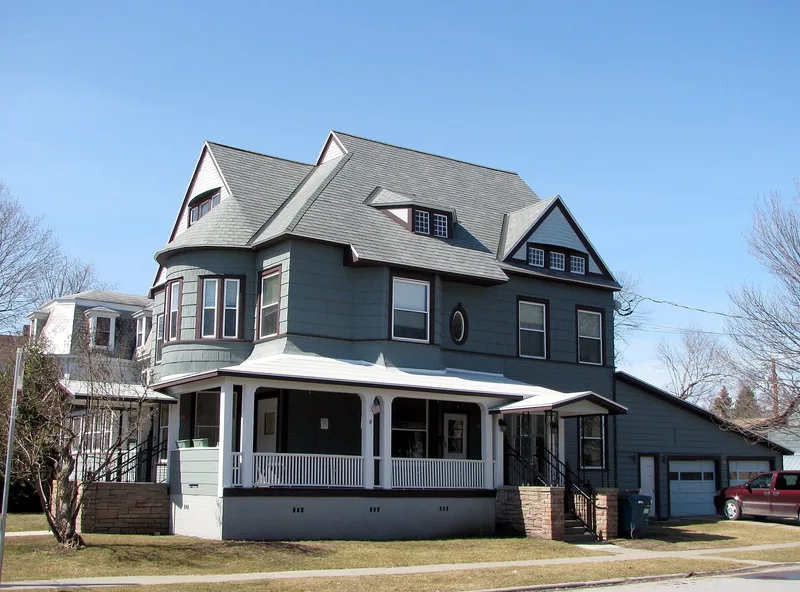
Brinkerhoff Street Historic District is a single block of 13 houses west of Plattsburgh's commercial center, running between Oak and North Catherine Streets. Most are one-and-one-half or two-story brick or frame residences built between 1845 and 1890, set close to the street behind small front yards and sharing a common scale and massing. Details include bracketed cornices, decorative porches, molded lintels and two-story bay windows. The houses were generally built by local merchants, manufacturers and professionals, and they adapt Greek Revival, Italianate, Second Empire, Eclectic and Colonial Revival designs in a vernacular way. The district was listed as the best surviving example of a middle-class residential neighborhood from its period in the city, with its design, setting and materials intact. Notable buildings include numbers 65 and 67, a pair of small houses with decorative slate mansard roofs, and number 59, an Eclectic frame house with Eastlake detailing and a Victorian polychrome color scheme.
Machine-generated summary. This summary was generated by a language model from the official nomination document and has not been reviewed line by line by an editor. It may contain errors. Check the source document before relying on any detail. Source: nomination document (PDF) · catalog entry. Generated October 2026 (model claude-sonnet-5-5, prompt v1.0-2026-10-29).
| Styles | Vernacular adaptations of Greek Revival, Italianate, Second Empire, Eclectic and Colonial Revival |
|---|---|
| Areas of significance | Architecture |
| Acreage | 6 |
| Boundary source | NPS cultural-resource GIS polygon |
| Full listing page | Brinkerhoff Street Historic District (property record) |
What listing means for this property
This is a historic district. Buildings within its boundary are either contributing (they add to the district's significance) or non-contributing. Owners of contributing income-producing buildings can claim the 20% federal rehabilitation tax credit; homeowners should look at state credits. National Register districts impose no design review by themselves; a local historic district ordinance, if one exists, does (the difference explained).
General information, not legal or tax advice. Rules change; confirm with your State Historic Preservation Office or a qualified adviser.