Bridge Square Historic District

Why it's listed
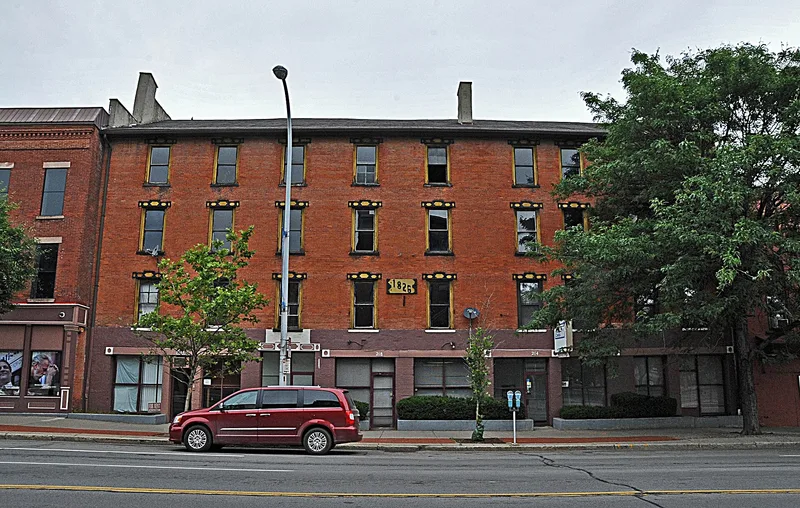
Bridge Square Historic District is a 10.5-acre area of brick commercial and industrial buildings on the western edge of downtown Rochester, New York. Its growth followed the Erie Canal, which opened here in 1826, and the nearby Genesee Valley Canal and railroads that made the square a transportation junction. Twenty-four buildings and brick-paved Bennett Alley contribute to the district. The oldest is the Federal style United States Hotel of 1826, a four-story brick and fieldstone building that kept much of its original interior woodwork and plan. In 1850 the University of Rochester and a theological seminary, now Colgate Rochester Divinity School, began there. Other buildings include Italianate and Romanesque commercial blocks on West Main Street, large industrial buildings along Cascade Drive, and the c. 1830 Greek Revival Loomis House, the only frame building left. The district shows the shift from residential to commercial to industrial use between the 1820s and 1920s. Development ended after the canal was moved in 1917, and the buildings remain in use.
Machine-generated summary. This summary was generated by a language model from the official nomination document and has not been reviewed line by line by an editor. It may contain errors. Check the source document before relying on any detail. Source: nomination document (PDF) · catalog entry. Generated October 2026 (model claude-sonnet-5-5, prompt v1.0-2026-10-29).
| Period of significance | 1826-1928 |
|---|---|
| Styles | Federal, Greek Revival, Italianate, Romanesque, Chicago style commercial, and utilitarian industrial styles |
| Areas of significance | Commerce, Transportation, Education, Architecture |
| Acreage | 10.5 |
| Boundary source | NPS cultural-resource GIS polygon |
| Full listing page | Bridge Square Historic District (property record) |
What listing means for this property
This is a historic district. Buildings within its boundary are either contributing (they add to the district's significance) or non-contributing. Owners of contributing income-producing buildings can claim the 20% federal rehabilitation tax credit; homeowners should look at state credits. National Register districts impose no design review by themselves; a local historic district ordinance, if one exists, does (the difference explained).
General information, not legal or tax advice. Rules change; confirm with your State Historic Preservation Office or a qualified adviser.