Brick Row Historic District

The National Park Service has not published a boundary polygon for this district; the map shows the listed properties inside it and the district's reference point.
Why it's listed
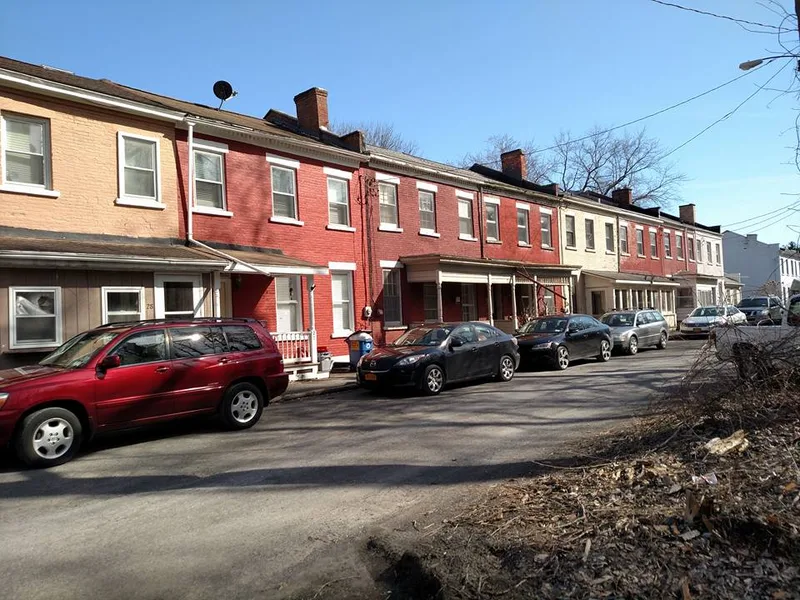
Brick Row is a group of brick Greek Revival rowhouses, plus one clapboard building, in an isolated corner of northern Athens off Route 385. Built in 1864, the houses sheltered employees of the Saratoga and Hudson River Railroad, a line organized by Daniel Drew and Cornelius Vanderbilt that carried goods from Schenectady to the Athens docks for shipment down the Hudson. The railroad's success helped make Athens one of the busiest spots on the river in the 1860s. After a fire destroyed the terminal, dockyards and offices in 1876, the worker housing was all that remained of that community. Brick Row then became a community of its own, home to various ethnic groups, including many Italian immigrants who worked in local brickyards and icehouses. Number 32 was originally a tavern. The row is divided into a lower section of seventeen residences and an upper section of eleven. Apart from enclosed porches and three demolished houses, it has changed little, and immigrant families still live there.
Machine-generated summary. This summary was generated by a language model from the official nomination document and has not been reviewed line by line by an editor. It may contain errors. Check the source document before relying on any detail. Source: nomination document (PDF) · catalog entry. Generated October 2026 (model claude-sonnet-5-5, prompt v1.0-2026-10-29).
| Styles | Greek Revival |
|---|---|
| Areas of significance | Transportation, Architecture |
| Acreage | 4 |
| Boundary source | not published |
| Full listing page | Brick Row Historic District (property record) |
What listing means for this property
This is a historic district. Buildings within its boundary are either contributing (they add to the district's significance) or non-contributing. Owners of contributing income-producing buildings can claim the 20% federal rehabilitation tax credit; homeowners should look at state credits. National Register districts impose no design review by themselves; a local historic district ordinance, if one exists, does (the difference explained).
General information, not legal or tax advice. Rules change; confirm with your State Historic Preservation Office or a qualified adviser.