Boston Post Road Historic District

Why it's listed
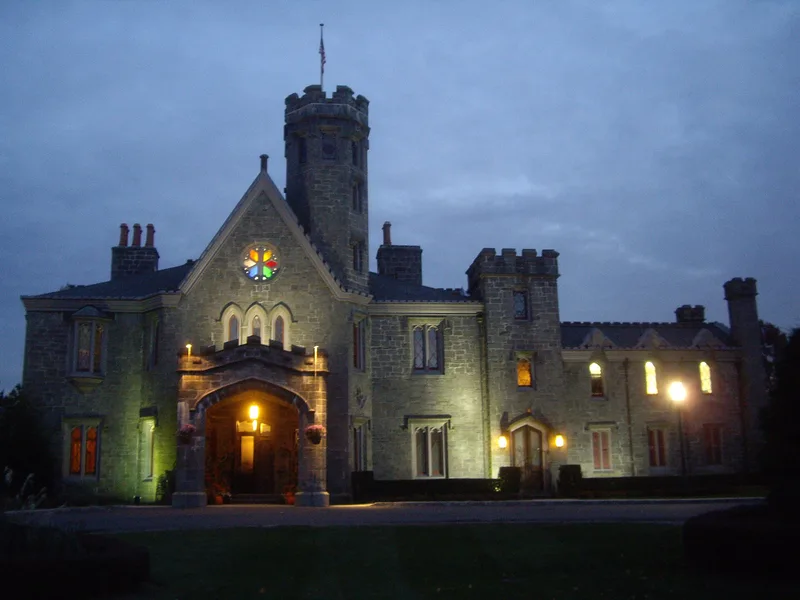
Along the Boston Post Road in Rye, this 300-acre district between the road and Long Island Sound preserves a large stretch of open land in a densely built corridor. It contains three major estate houses, twenty-two other buildings, the Rye City Golf Club, the Jay family cemetery and the Marshlands Conservancy. Two of the mansions, Alansten (1838) and Lounsberry (also 1838, with later additions), are Greek Revival residences with porticos, fine interior detailing and surrounding outbuildings such as carriage houses, cottages, a tennis house and a greenhouse. Whitby, completed in 1854 to designs by Alexander Jackson Davis, is a Gothic Revival stone building with towers and now serves as the golf club clubhouse. The district is valued for showing the nineteenth-century development of lower Westchester County and for retaining much of its original character. Shell middens and artifacts also show that Native peoples used the shoreline for thousands of years.
Machine-generated summary. This summary was generated by a language model from the official nomination document and has not been reviewed line by line by an editor. It may contain errors. Check the source document before relying on any detail. Source: nomination document (PDF) · catalog entry. Generated October 2026 (model claude-sonnet-5-5, prompt v1.0-2026-10-29).
| Styles | Greek Revival, Gothic Revival, Classical Revival |
|---|---|
| Areas of significance | Prehistoric, Architecture, Conservation |
| Acreage | 300 |
| Boundary source | NPS cultural-resource GIS polygon |
| Full listing page | Boston Post Road Historic District (property record) |
What listing means for this property
This is a historic district. Buildings within its boundary are either contributing (they add to the district's significance) or non-contributing. Owners of contributing income-producing buildings can claim the 20% federal rehabilitation tax credit; homeowners should look at state credits. National Register districts impose no design review by themselves; a local historic district ordinance, if one exists, does (the difference explained).
General information, not legal or tax advice. Rules change; confirm with your State Historic Preservation Office or a qualified adviser.