Blydenburgh Park Historic District

Why it's listed
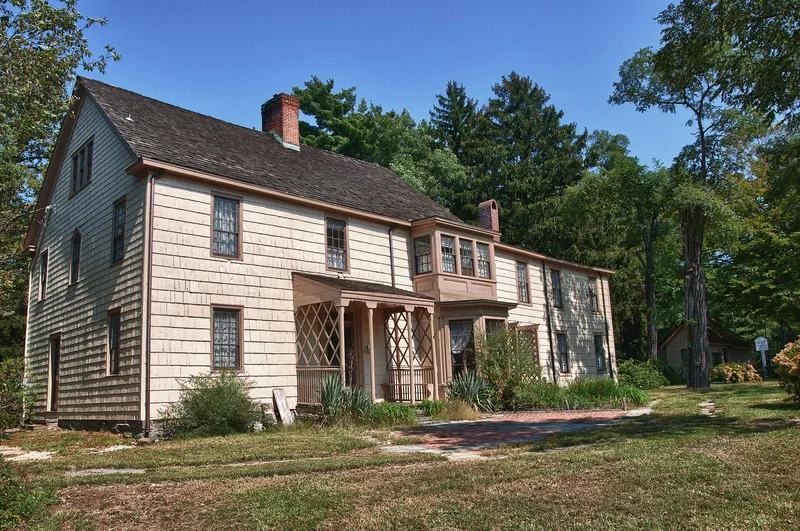
Bushy Neck, a small settlement within Blydenburgh County Park in Smithtown, Long Island, survives as a ten-acre district of nine historic structures. A mill complex on the New Mill Pond includes the c.1800 New Mill, a grist mill that keeps its original framing, plan and remnants of machinery, and the c.1802 Miller's Cottage, a gambrel-roofed house with Federal details and an unusual two-story porch. Uphill sits a farm complex centered on Isaac Blydenburgh's 1821 farmhouse, a Gothic Revival cottage, and several outbuildings including a corn crib, barns and a privy. The Blydenburgh family, early Smithtown settlers, established the settlement around 1800 and ran the mills, including woolen cloth production during the Civil War, until 1924. The surrounding woods and farmland remain undeveloped, and no modern buildings stand inside the boundary. The district was recognized as a rare, intact example of Smithtown's early nineteenth century agricultural and milling life.
Machine-generated summary. This summary was generated by a language model from the official nomination document and has not been reviewed line by line by an editor. It may contain errors. Check the source document before relying on any detail. Source: nomination document (PDF) · catalog entry. Generated October 2026 (model claude-sonnet-5-5, prompt v1.0-2026-10-29).
| Period of significance | c.1800-c.1900 |
|---|---|
| Styles | Federal; Gothic Revival (cottage); early nineteenth century Long Island farmhouse and mill architecture |
| Areas of significance | Exploration/Settlement, Architecture |
| Acreage | 10 |
| Boundary source | NPS cultural-resource GIS polygon |
| Full listing page | Blydenburgh Park Historic District (property record) |
What listing means for this property
This is a historic district. Buildings within its boundary are either contributing (they add to the district's significance) or non-contributing. Owners of contributing income-producing buildings can claim the 20% federal rehabilitation tax credit; homeowners should look at state credits. National Register districts impose no design review by themselves; a local historic district ordinance, if one exists, does (the difference explained).
General information, not legal or tax advice. Rules change; confirm with your State Historic Preservation Office or a qualified adviser.