Berkeley Park Subdivision Historic District

Why it's listed
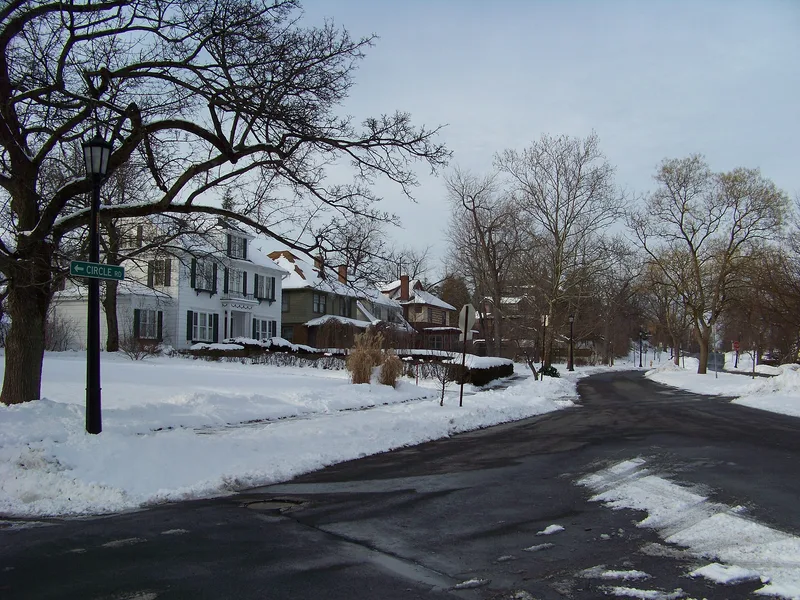
Berkeley Park is a forty-one acre residential subdivision in southeast Syracuse, laid out in 1911 by architect and developer Clarence S. Congdon. Built on a drumlin, its curving, climbing streets follow the natural contours, with terraces, elevated sidewalks, public stairways, shared drives, cast iron handrails and period street lamps. Berkeley Drive, a tree-planted boulevard, is the main street. Congdon imposed protective provisions limiting the area to single-family homes, with minimum frontage, set backs, limits on front-yard garages and minimum construction costs. The result is a neighborhood of early twentieth century revival-style houses, including English Colonial Revival, Tudor Revival, Arts and Crafts, Spanish Eclectic and Four Square examples. Local architects Ward Wellington Ward, Gordon Wright, Merton Elwood Granger and Dwight James Baum designed houses here. Forty-five percent of the properties were built by 1924 and eighty-nine percent by 1934. Of 137 properties, 126 contribute, along with the original road system, and the district keeps a high level of integrity.
Machine-generated summary. This summary was generated by a language model from the official nomination document and has not been reviewed line by line by an editor. It may contain errors. Check the source document before relying on any detail. Source: nomination document (PDF) · catalog entry. Generated October 2026 (model claude-sonnet-5-5, prompt v1.0-2026-10-29).
| Styles | Late 19th and 20th Century Revivals (Spanish Colonial Revival, Tudor Revival, Colonial Revival); Arts and Crafts; American Four Square; Neo-Byzantine |
|---|---|
| Areas of significance | Architecture, Landscape Architecture |
| Acreage | 42 |
| Boundary source | NPS cultural-resource GIS polygon |
| Full listing page | Berkeley Park Subdivision Historic District (property record) |
What listing means for this property
This is a historic district. Buildings within its boundary are either contributing (they add to the district's significance) or non-contributing. Owners of contributing income-producing buildings can claim the 20% federal rehabilitation tax credit; homeowners should look at state credits. National Register districts impose no design review by themselves; a local historic district ordinance, if one exists, does (the difference explained).
General information, not legal or tax advice. Rules change; confirm with your State Historic Preservation Office or a qualified adviser.