Bellport Village Historic District

The National Park Service has not published a boundary polygon for this district; the map shows the listed properties inside it and the district's reference point.
Why it's listed
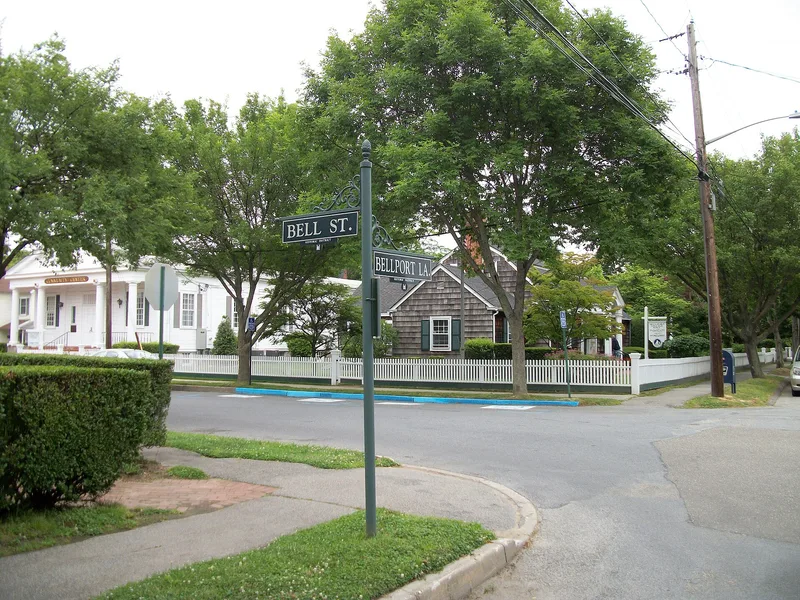
Bellport Village Historic District covers roughly 80 mostly residential buildings on Long Island's south shore. It follows parts of South Country Road, Bellport Lane, Brown's Lane and Brewster Lane, plus all of Bell Street, and wraps around the village's modern business center on three sides. Houses range from the 1820s and 1830s to the early 1900s, with clapboard and shingled exteriors, gable and gambrel roofs, porches and picket fences. Several churches serve as key landmarks. The district reflects two chapters in the village's story. Sea captain Thomas Bell and his brother John established a dock and shipyard in the 1820s, turning a rural settlement into a small seaport; an 1837 storm then closed the nearby Fire Island inlet and ended that future. From the 1850s, Bellport became a popular summer resort, and many vacation houses were built. Broad streets, mature trees and white picket fences add to the district's character.
Machine-generated summary. This summary was generated by a language model from the official nomination document and has not been reviewed line by line by an editor. It may contain errors. Check the source document before relying on any detail. Source: nomination document (PDF) · catalog entry. Generated October 2026 (model claude-sonnet-5-5, prompt v1.0-2026-10-29).
| Period of significance | 1800-1899 and 1900- (specific dates various) |
|---|---|
| Boundary source | not published |
| Full listing page | Bellport Village Historic District (property record) |
What listing means for this property
This is a historic district. Buildings within its boundary are either contributing (they add to the district's significance) or non-contributing. Owners of contributing income-producing buildings can claim the 20% federal rehabilitation tax credit; homeowners should look at state credits. National Register districts impose no design review by themselves; a local historic district ordinance, if one exists, does (the difference explained).
General information, not legal or tax advice. Rules change; confirm with your State Historic Preservation Office or a qualified adviser.