Bedford Road Historic District

Why it's listed
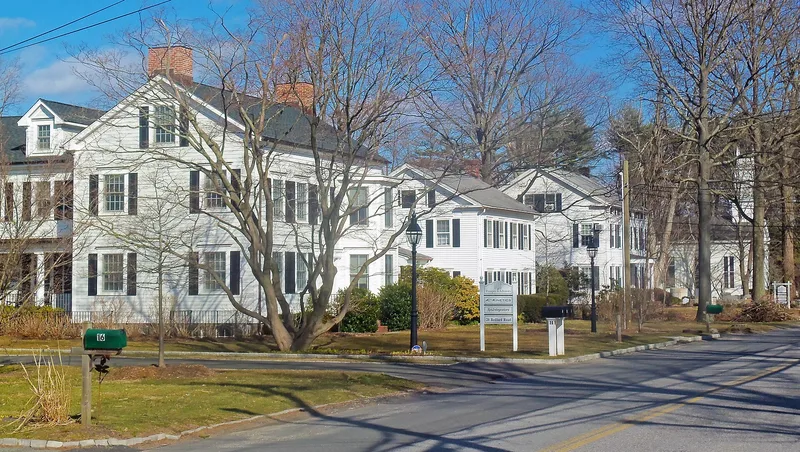
Bedford Road in Armonk was the first focus of the hamlet's subdivision and building, and its north side still preserves a row of mid-nineteenth-century buildings. The district contains St. Stephen's Episcopal Church (1842), a wooden Greek Revival temple with a recessed porch and fluted Doric columns in antis, along with a cemetery of about 450 graves and six houses. Most houses date from about 1850 and range from the large former rectory at No. 40 to modest village dwellings; one house was moved and converted from a shoemaker's shop in 1888, and another was built about 1880. The church was the hamlet's first building, and church lands were subdivided under vestry control, shaping later growth. Together the buildings show how Federal and Greek Revival forms lasted in local vernacular architecture. Four houses have modern siding, but form, spacing and setback remain clear, in contrast to heavily altered buildings elsewhere in the hamlet.
Machine-generated summary. This summary was generated by a language model from the official nomination document and has not been reviewed line by line by an editor. It may contain errors. Check the source document before relying on any detail. Source: nomination document (PDF) · catalog entry. Generated October 2026 (model claude-sonnet-5-5, prompt v1.0-2026-10-29).
| Period of significance | 1842-c.1888 |
|---|---|
| Styles | Greek Revival, with Federal-influenced vernacular houses |
| Areas of significance | Exploration/Settlement, Architecture |
| Acreage | 4.5 |
| Boundary source | NPS cultural-resource GIS polygon |
| Full listing page | Bedford Road Historic District (property record) |
What listing means for this property
This is a historic district. Buildings within its boundary are either contributing (they add to the district's significance) or non-contributing. Owners of contributing income-producing buildings can claim the 20% federal rehabilitation tax credit; homeowners should look at state credits. National Register districts impose no design review by themselves; a local historic district ordinance, if one exists, does (the difference explained).
General information, not legal or tax advice. Rules change; confirm with your State Historic Preservation Office or a qualified adviser.