Bedford Corners Historic District

Why it's listed
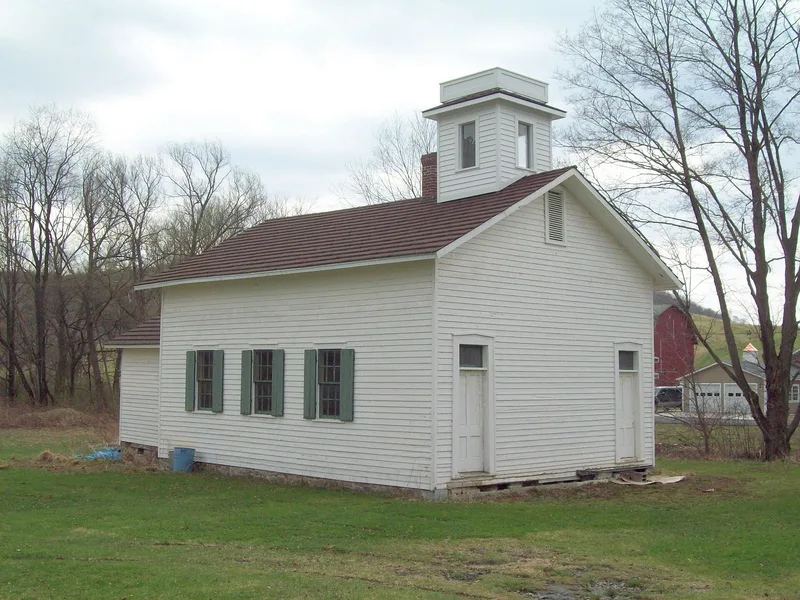
Bedford Corners is a small crossroads district northeast of Portville, where NY 305 meets Deer Creek and Dodge Creek Roads. Three buildings occupy three of the four corners, with open fields around them and the fourth corner left as open land. The oldest is the Greek Revival farmhouse of Jacob Bedford, believed built soon after he bought land here in 1856. Across the road is the frame one-room schoolhouse of Joint District Number 7, built in 1864 on land Bedford deeded to the district. The third building is a two-story frame cheese factory, built after 1886 by Jason Hopkins and later used as a grange hall and community meeting place. The district covers nearly 50 acres assembled by Bedford. It was listed as a surviving example of a rural crossroads grouping that was once common in the state, with buildings that remain largely intact and reflect the importance of small-scale farming and dairying to the county. The house is occupied, while the school and grange hall are vacant.
Machine-generated summary. This summary was generated by a language model from the official nomination document and has not been reviewed line by line by an editor. It may contain errors. Check the source document before relying on any detail. Source: nomination document (PDF) · catalog entry. Generated October 2026 (model claude-sonnet-5-5, prompt v1.0-2026-10-29).
| Period of significance | 1856-1953 |
|---|---|
| Styles | Mid-19th Century: Greek Revival; No Style |
| Areas of significance | Agriculture, Architecture, Social History |
| Acreage | 50 |
| Boundary source | NPS cultural-resource GIS polygon |
| Full listing page | Bedford Corners Historic District (property record) |
What listing means for this property
This is a historic district. Buildings within its boundary are either contributing (they add to the district's significance) or non-contributing. Owners of contributing income-producing buildings can claim the 20% federal rehabilitation tax credit; homeowners should look at state credits. National Register districts impose no design review by themselves; a local historic district ordinance, if one exists, does (the difference explained).
General information, not legal or tax advice. Rules change; confirm with your State Historic Preservation Office or a qualified adviser.