Balding Avenue Historic District

The National Park Service has not published a boundary polygon for this district; the map shows the listed properties inside it and the district's reference point.
Why it's listed
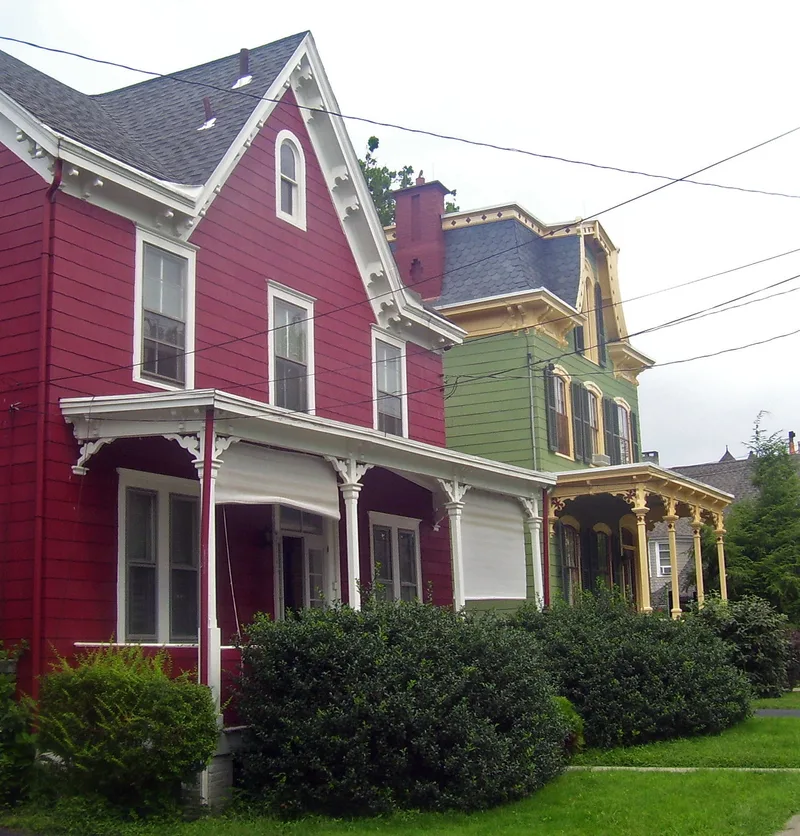
Balding Avenue in Poughkeepsie is a single tree-shaded block of middle-class houses built mainly after the middle of the nineteenth century, with most dating from about 1872 to 1905. The roughly four-acre district includes a row of four simple Bracketed-style houses, along with Second Empire dwellings with slate mansard roofs and several Queen Anne examples with turrets, shingles and decorative porches. Gothic Revival and Eastern Stick elements also appear. All of the houses are two to three-and-a-half stories and clapboarded, though many now have modern siding. The street was shown as proposed on an 1867 map. Compared with the grander homes of Academy Street and the many worker dwellings elsewhere in the city, these houses show modesty and simplicity, and the street often goes unnoticed. Its intact streetscape adds to its period character, and local architect Percival M. Lloyd designed one of the buildings. The block is described as well maintained, reflecting residents' pride, and only one building is non-contributing.
Machine-generated summary. This summary was generated by a language model from the official nomination document and has not been reviewed line by line by an editor. It may contain errors. Check the source document before relying on any detail. Source: nomination document (PDF) · catalog entry. Generated October 2026 (model claude-sonnet-5-5, prompt v1.0-2026-10-29).
| Styles | Bracketed, Second Empire, Queen Anne, Victorian Residential, Eastern Stick and Gothic Revival |
|---|---|
| Areas of significance | Architecture |
| Acreage | 4 |
| Boundary source | not published |
| Full listing page | Balding Avenue Historic District (property record) |
What listing means for this property
This is a historic district. Buildings within its boundary are either contributing (they add to the district's significance) or non-contributing. Owners of contributing income-producing buildings can claim the 20% federal rehabilitation tax credit; homeowners should look at state credits. National Register districts impose no design review by themselves; a local historic district ordinance, if one exists, does (the difference explained).
General information, not legal or tax advice. Rules change; confirm with your State Historic Preservation Office or a qualified adviser.