Ausable Club (Additional Documentation)

Why it's listed
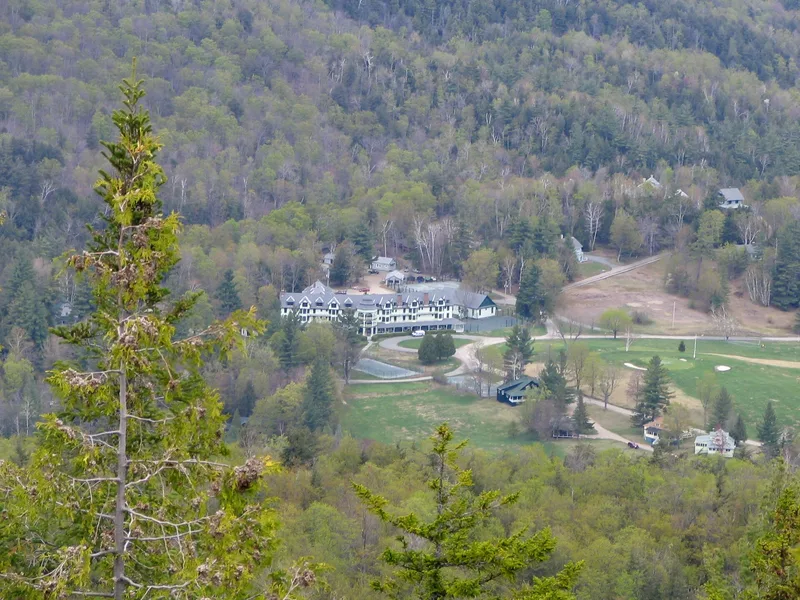
Built in 1890 as St. Hubert's Inn, this rambling wood-frame clubhouse sits on a shelf of land near Keene Valley, surrounded by the High Peaks of the Adirondacks. Two long guestroom blocks are set at a 22.5-degree angle and joined by a three-level, seven-sided porch tower, a design the nomination describes as an inventive response to the need for quick, inexpensive construction. Detailing is restrained, with Queen Anne and Stick Style touches such as bay windows, gabled dormers, balconies and brick chimneys. The hotel struggled financially and closed in 1904. The Adirondack Mountain Reserve bought it the next year and converted it to a clubhouse for the newly formed Ausable Club, which has used it since 1906. The listed area covers about seven acres, including a 1902 casino, service buildings, a bowling green and tennis courts. Few nineteenth-century resort hotels survive with so little change inside or out.
Machine-generated summary. This summary was generated by a language model from the official nomination document and has not been reviewed line by line by an editor. It may contain errors. Check the source document before relying on any detail. Source: nomination document (PDF) · catalog entry. Generated October 2026 (model claude-sonnet-5-5, prompt v1.0-2026-10-29).
| Styles | Late Victorian: Queen Anne/Stick Style |
|---|---|
| Areas of significance | Architecture, Entertainment/Recreation, Social History, Conservation |
| Acreage | 18.64 |
| Boundary source | NPS cultural-resource GIS polygon |
| Full listing page | Ausable Club (Additional Documentation) (property record) |
What listing means for this property
This is a historic district. Buildings within its boundary are either contributing (they add to the district's significance) or non-contributing. Owners of contributing income-producing buildings can claim the 20% federal rehabilitation tax credit; homeowners should look at state credits. National Register districts impose no design review by themselves; a local historic district ordinance, if one exists, does (the difference explained).
General information, not legal or tax advice. Rules change; confirm with your State Historic Preservation Office or a qualified adviser.