Asbury United Methodist Church and Bethel Chapel and Cemetery

Why it's listed
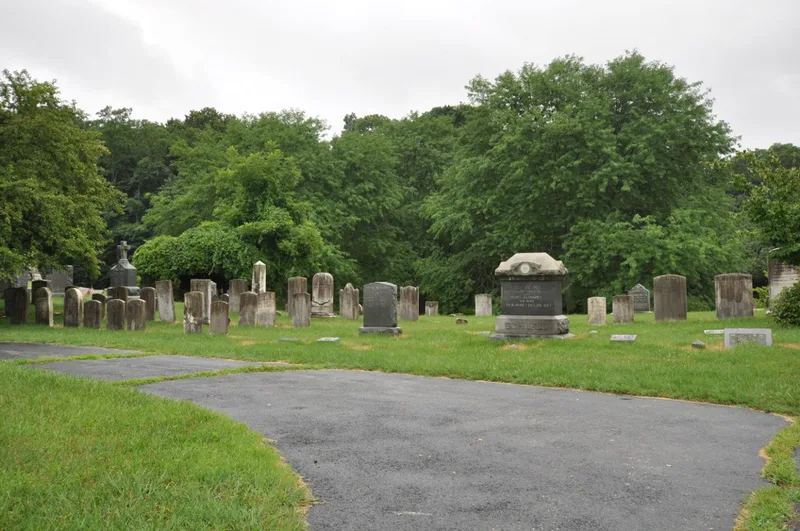
Two linked Methodist sites in Croton-on-Hudson make up this district. Bethel Chapel, built around 1790, is a one-and-a-half-story clapboard meeting house with a simple plan, heavy timber framing and a gallery on tapered wood posts. It sits at the top of a hill surrounded by a cemetery that holds roughly 5,000 graves, including at least two Revolutionary War soldiers and the author Lorraine Hansberry. Land for the chapel and burial ground is traditionally tied to Pierre Van Cortlandt, and Bishop Francis Asbury's 1795 journal mentions the chapel. As the congregation grew, it built Asbury United Methodist Church, dedicated in 1883. This brick High Victorian Gothic building has a slate polychrome roof, an engaged corner tower and a large stained glass window added in 1891. The chapel is considered a rare, well-preserved example of plain Methodist building, and the church is valued for its proportions and detailing. A former bank, a passageway and a former rectory are noncontributing.
Machine-generated summary. This summary was generated by a language model from the official nomination document and has not been reviewed line by line by an editor. It may contain errors. Check the source document before relying on any detail. Source: nomination document (PDF) · catalog entry. Generated October 2026 (model claude-sonnet-5-5, prompt v1.0-2026-10-29).
| Period of significance | c. 1790 - 1950 |
|---|---|
| Styles | Late Victorian: High Victorian Eclectic; Early Republic: Federal |
| Areas of significance | Architecture |
| Acreage | 6.8 |
| Boundary source | NPS cultural-resource GIS polygon |
| Full listing page | Asbury United Methodist Church and Bethel Chapel and Cemetery (property record) |
What listing means for this property
This is a historic district. Buildings within its boundary are either contributing (they add to the district's significance) or non-contributing. Owners of contributing income-producing buildings can claim the 20% federal rehabilitation tax credit; homeowners should look at state credits. National Register districts impose no design review by themselves; a local historic district ordinance, if one exists, does (the difference explained).
General information, not legal or tax advice. Rules change; confirm with your State Historic Preservation Office or a qualified adviser.