Arbor Hill Historic District-Ten Broeck Triangle (Boundary Increase)

Why it's listed
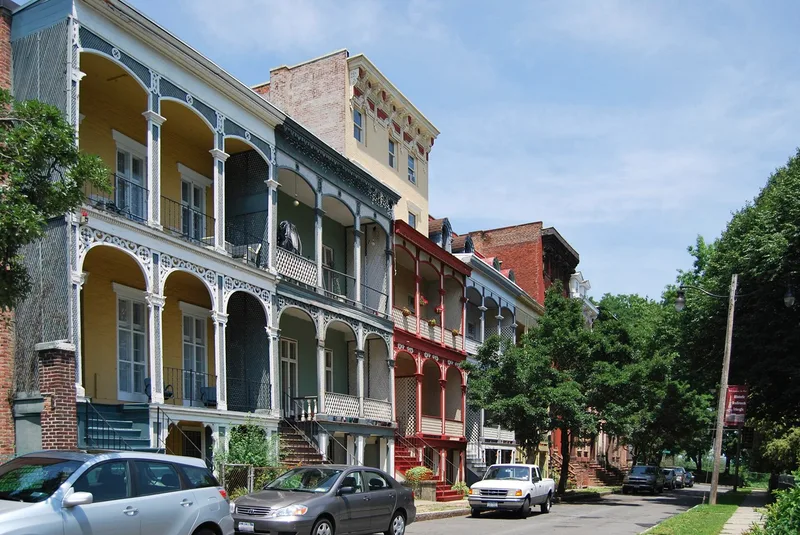
Arbor Hill in Albany is a residential neighborhood north of downtown and west of North Pearl Street. It was surveyed and subdivided as early as 1764 and became a distinct neighborhood in the 1830s, with modest detached houses. After mid-century the eastern part was reshaped by two parks, a Gothic church and fashionable townhouses, forming the Ten Broeck Triangle, listed in 1978. This boundary increase adds about 120 structures on First, Second and North Swan Streets, Ten Broeck Place and part of North Hawk Street, bringing the total to roughly 220 contributing elements. The added buildings are mostly attached and semi-detached houses, with some mixed commercial buildings and a former school. Simple Greek Revival and Italianate designs predominate, dating from about 1840 to 1910. Land west of North Swan Street was left out because of heavy demolition and alteration. The expanded district was renamed Arbor Hill, a name used for the area throughout the nineteenth century.
Machine-generated summary. This summary was generated by a language model from the official nomination document and has not been reviewed line by line by an editor. It may contain errors. Check the source document before relying on any detail. Source: nomination document (PDF) · catalog entry. Generated October 2026 (model claude-sonnet-5-5, prompt v1.0-2026-10-29).
| Period of significance | 1830-1910 |
|---|---|
| Styles | Greek Revival, Italianate, Romanesque and Gothic rowhouses and detached houses, 1840-1910 |
| Areas of significance | Architecture |
| Acreage | 21 |
| Boundary source | NPS cultural-resource GIS polygon |
| Full listing page | Arbor Hill Historic District-Ten Broeck Triangle (Boundary Increase) (property record) |
What listing means for this property
This is a historic district. Buildings within its boundary are either contributing (they add to the district's significance) or non-contributing. Owners of contributing income-producing buildings can claim the 20% federal rehabilitation tax credit; homeowners should look at state credits. National Register districts impose no design review by themselves; a local historic district ordinance, if one exists, does (the difference explained).
General information, not legal or tax advice. Rules change; confirm with your State Historic Preservation Office or a qualified adviser.