Andes Historic District

Why it's listed
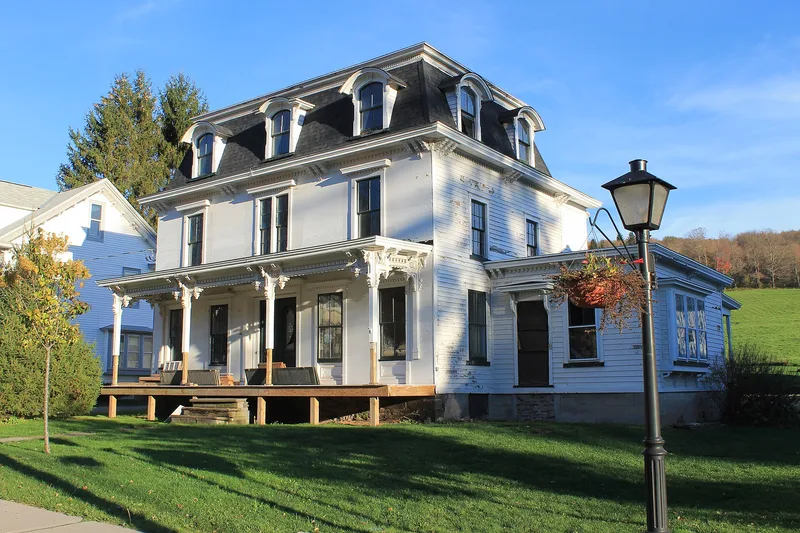
Andes is a small hamlet set in a narrow valley among the foothills of the Western Catskills in Delaware County, New York. Its historic district covers 84 properties along Delaware Avenue, Main Street, High Street and Tremperskill Road. Most buildings are modest two-story frame houses from the mid-nineteenth century, built in vernacular versions of Greek Revival, Italianate and other fashions. Standouts include the 1858 Corner Store in Carpenter Gothic style, Duncan Ballantyne's Italianate mansion, the 1864 Ballantyne Bank Building, and the Presbyterian and Methodist churches. The 1937 Andes Central School adds a neo-Georgian presence. Settled in the late eighteenth century, the community grew around mills on Tremperskill Creek, took part in the Anti-Rent activity of the 1840s, and became the commercial and cultural center of a remote farming area. The district was recognized for its intact streetscape, consistent scale and materials, and the quality of its craftsmanship.
Machine-generated summary. This summary was generated by a language model from the official nomination document and has not been reviewed line by line by an editor. It may contain errors. Check the source document before relying on any detail. Source: nomination document (PDF) · catalog entry. Generated October 2026 (model claude-sonnet-5-5, prompt v1.0-2026-10-29).
| Period of significance | c. 1820s - 1937 |
|---|---|
| Styles | Vernacular interpretations of Greek Revival, Italianate, Gothic Revival, Queen Anne and other nineteenth and early twentieth century styles |
| Areas of significance | Architecture |
| Acreage | 55 |
| Boundary source | NPS cultural-resource GIS polygon |
| Full listing page | Andes Historic District (property record) |
What listing means for this property
This is a historic district. Buildings within its boundary are either contributing (they add to the district's significance) or non-contributing. Owners of contributing income-producing buildings can claim the 20% federal rehabilitation tax credit; homeowners should look at state credits. National Register districts impose no design review by themselves; a local historic district ordinance, if one exists, does (the difference explained).
General information, not legal or tax advice. Rules change; confirm with your State Historic Preservation Office or a qualified adviser.