Amherst Avenue Historic District

Why it's listed
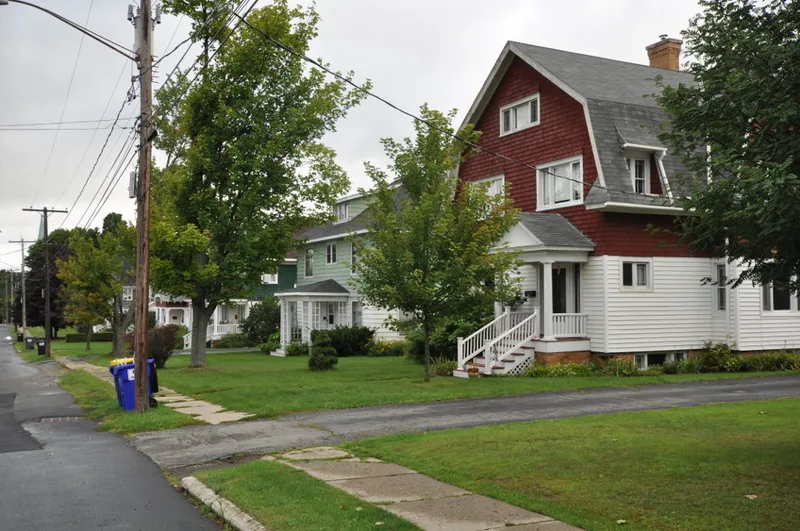
Amherst Avenue in Ticonderoga's village center holds a compact group of ten houses and six garages built between 1921 and 1923. Local builder William A. Gale constructed them for the Ticonderoga Pulp and Paper Company, which rented them to mill management. The wood-frame houses share shingle and clapboard siding, front porches and tripartite windows. Four show Bungalow influence, with sloping roofs over recessed porches, wide eaves and triangular brackets. Four are hip-roofed four squares, and Doric porch columns and gable returns add Colonial Revival touches. The street was listed for its architecture and for what it shows about company-sponsored workers' housing in the early twentieth century, when the firm built modern homes while larger paper companies faced labor strife. International Paper bought the company in 1925 and began selling the houses to tenants in the late 1940s. The district remains largely unchanged and is still residential, with 16 contributing and three noncontributing buildings on about 3.5 acres.
Machine-generated summary. This summary was generated by a language model from the official nomination document and has not been reviewed line by line by an editor. It may contain errors. Check the source document before relying on any detail. Source: nomination document (PDF) · catalog entry. Generated October 2026 (model claude-sonnet-5-5, prompt v1.0-2026-10-29).
| Period of significance | 1921-1923 |
|---|---|
| Styles | Bungalow, Colonial Revival |
| Areas of significance | Architecture |
| Acreage | 3.5 |
| Boundary source | NPS cultural-resource GIS polygon |
| Full listing page | Amherst Avenue Historic District (property record) |
What listing means for this property
This is a historic district. Buildings within its boundary are either contributing (they add to the district's significance) or non-contributing. Owners of contributing income-producing buildings can claim the 20% federal rehabilitation tax credit; homeowners should look at state credits. National Register districts impose no design review by themselves; a local historic district ordinance, if one exists, does (the difference explained).
General information, not legal or tax advice. Rules change; confirm with your State Historic Preservation Office or a qualified adviser.