Allentown Historic District (Boundary Increase)

The National Park Service has not published a boundary polygon for this district; the map shows the listed properties inside it and the district's reference point.
Why it's listed
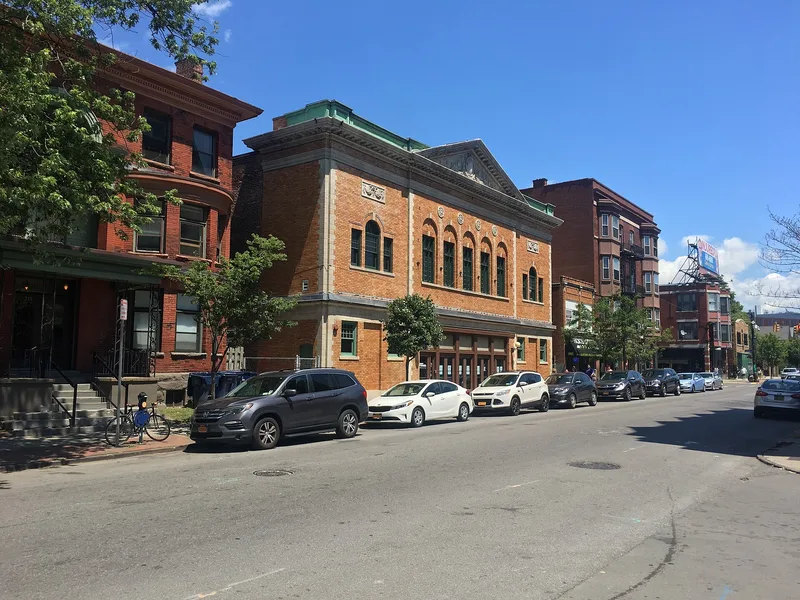
Allentown is a neighborhood of central Buffalo, roughly a mile north of downtown, that grew from the early villages of Buffalo and Black Rock. This boundary expansion replaces the 1980 listing with one record covering the neighborhood's historic borders and its community identity. Most buildings are detached single-family homes from the mid-19th to early 20th century, many of them frame, alongside clubhouses, churches, apartment buildings and commercial blocks along Allen Street, Delaware Avenue and Main Street. Five residential squares survive, two of them, Symphony Circle and Day's Park, designed by Frederick Law Olmsted. Notable buildings include a Greek Revival block from 1829, thought to be the oldest in the district, and the Coit house, reputed to be the oldest dwelling in Buffalo. Irving Place includes the childhood home of F. Scott Fitzgerald. The updated period of significance runs from 1829 into the 1960s, when the Allentown Association formed and midcentury buildings were constructed. The district count lists 316 contributing and 21 noncontributing buildings in the added area.
Machine-generated summary. This summary was generated by a language model from the official nomination document and has not been reviewed line by line by an editor. It may contain errors. Check the source document before relying on any detail. Source: nomination document (PDF) · catalog entry. Generated October 2026 (model claude-sonnet-5-5, prompt v1.0-2026-10-29).
| Period of significance | 1829 into the 1960s |
|---|---|
| Styles | Mid-19th century Greek and Gothic Revival; Late Victorian (Italianate, Second Empire, Queen Anne, Stick/Eastlake, Romanesque); Late 19th and early 20th century Revivals; Modern Movement (Moderne, Art Deco, Miesian) |
| Areas of significance | Architecture, Landscape Architecture, Exploration/Settlement, Commerce, Social History |
| Acreage | 232.1 |
| Boundary source | not published |
| Full listing page | Allentown Historic District (Boundary Increase) (property record) |
What listing means for this property
This is a historic district. Buildings within its boundary are either contributing (they add to the district's significance) or non-contributing. Owners of contributing income-producing buildings can claim the 20% federal rehabilitation tax credit; homeowners should look at state credits. National Register districts impose no design review by themselves; a local historic district ordinance, if one exists, does (the difference explained).
General information, not legal or tax advice. Rules change; confirm with your State Historic Preservation Office or a qualified adviser.