Albany Rural Cemetery

Why it's listed
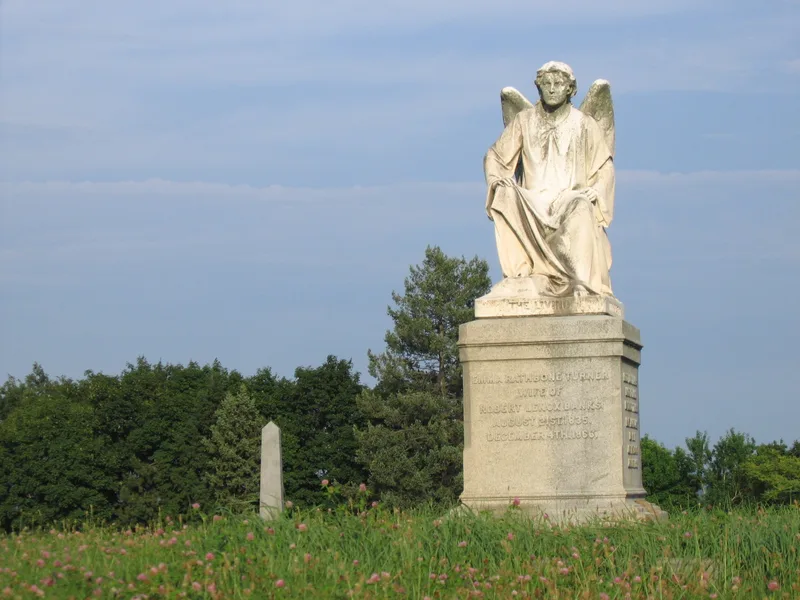
Albany Rural Cemetery, founded in 1844 and laid out by Major D.B. Douglass, covers 467 acres on high ground overlooking the Hudson River in Menands. Thirty-five miles of winding roads, named sections and an artificial lake called Cypress Water give it the irregular, picturesque plan typical of the rural cemetery movement. Nearly one hundred thousand people are buried here, including early graves moved from what is now Washington Park in Albany. Five major structures stand on the grounds: an 1882 office and an 1884 Romanesque Revival chapel, both designed by Robert Gibson, an 1899 Neoclassical Revival superintendent's residence, a gatehouse by Marcus Reynolds, and a barn complex. Mausoleums, vaults, sarcophagi, obelisks and sculpture, including work by Erastus Dow Palmer, show Victorian attitudes toward death and changing memorial tastes into the twentieth century. It was listed as an early, fine example of its type and as an outdoor collection of American sculpture.
Machine-generated summary. This summary was generated by a language model from the official nomination document and has not been reviewed line by line by an editor. It may contain errors. Check the source document before relying on any detail. Source: nomination document (PDF) · catalog entry. Generated October 2026 (model claude-sonnet-5-5, prompt v1.0-2026-10-29).
| Areas of significance | Landscape Architecture, Art, Architecture |
|---|---|
| Acreage | 467 |
| Boundary source | NPS cultural-resource GIS polygon |
| Full listing page | Albany Rural Cemetery (property record) |
What listing means for this property
This is a historic district. Buildings within its boundary are either contributing (they add to the district's significance) or non-contributing. Owners of contributing income-producing buildings can claim the 20% federal rehabilitation tax credit; homeowners should look at state credits. National Register districts impose no design review by themselves; a local historic district ordinance, if one exists, does (the difference explained).
General information, not legal or tax advice. Rules change; confirm with your State Historic Preservation Office or a qualified adviser.