Adam, J.N.-AM&A Historic District

Why it's listed
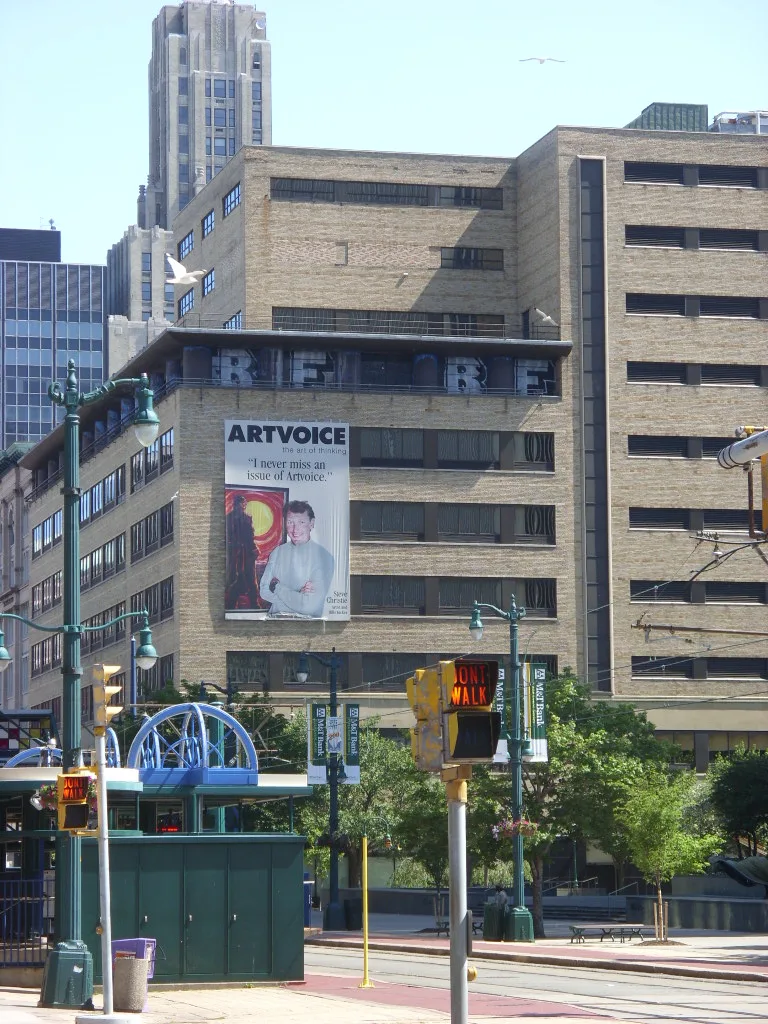
This group of eight buildings in downtown Buffalo once formed the J. N. Adam & Co. department store and, from 1960, the home of Adam, Meldrum & Anderson (AM&A's). The main store on Main Street, a seven-story Art Moderne block 382 feet wide, dates to 1935 with an addition of 1946-1948 by Starrett & Van Vleck. It incorporates older buildings, including service buildings on Washington Street designed by Green & Wicks in 1891-1892 and 1895-1896 and by Esenwein & Johnson in 1909. Warehouse buildings on Washington and Ellicott Streets, dating from 1911-1912 and later, completed the complex. Materials range from brick, terra cotta and cast iron in the nineteenth century to granite, stone, plate glass and steel framing in the twentieth. The district was listed because it still conveys the character of a large downtown department store that grew and prospered from the late nineteenth century to the mid twentieth. Most of the buildings have been vacant for many years, but one has been rehabilitated.
Machine-generated summary. This summary was generated by a language model from the official nomination document and has not been reviewed line by line by an editor. It may contain errors. Check the source document before relying on any detail. Source: nomination document (PDF) · catalog entry. Generated October 2026 (model claude-sonnet-5-5, prompt v1.0-2026-10-29).
| Styles | Late 19th & Early 20th Century American Movements/Commercial; Late 19th & Early 20th Century Revivals/Classical Revival; Modern Movement/Moderne |
|---|---|
| Areas of significance | Architecture, Commerce |
| Acreage | 2.4 |
| Boundary source | NPS cultural-resource GIS polygon |
| Full listing page | Adam, J.N.-AM&A Historic District (property record) |
What listing means for this property
This is a historic district. Buildings within its boundary are either contributing (they add to the district's significance) or non-contributing. Owners of contributing income-producing buildings can claim the 20% federal rehabilitation tax credit; homeowners should look at state credits. National Register districts impose no design review by themselves; a local historic district ordinance, if one exists, does (the difference explained).
Noted as vacant in the nomination. Nomination documents can be decades old; current status may differ. If you are considering buying an empty listed property, read the due-diligence checklist.
General information, not legal or tax advice. Rules change; confirm with your State Historic Preservation Office or a qualified adviser.