Woodland, Newton Highlands, and Newton Centre Railroad Stations, and Baggage and Express Building

Why it's listed
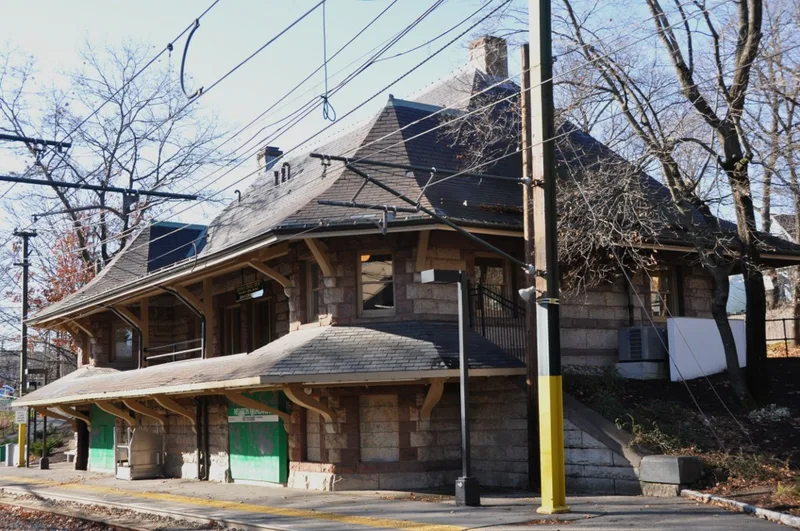
Three railroad stations and a baggage building in Newton, Massachusetts, survive from a group of twelve built for the Boston and Albany Railroad's Highlands Branch in the mid-1880s. Woodland (1884), Newton Highlands (1885) and Newton Centre (1886) were designed through the office of Henry Hobson Richardson, with landscaping by Frederick Law Olmsted that no longer survives. Only Woodland is known to be Richardson's own work; the other two are believed to have been completed by Shepley, Rutan and Coolidge after his death. Built of rough-cut stone under broad, low slate hip roofs, the buildings show Richardsonian Romanesque character. The Highlands Branch helped Newton grow as a commuter suburb of Boston. Most other stations were torn down after the MBTA took over service. Woodland has been used for golf club storage since the 1950s, while the other stations and the baggage building have found commercial and transit uses. The three stations are significant as the remaining examples of the original twelve.
Machine-generated summary. This summary was generated by a language model from the official nomination document and has not been reviewed line by line by an editor. It may contain errors. Check the source document before relying on any detail. Source: nomination document (PDF) · catalog entry. Generated October 2026 (model claude-sonnet-5-5, prompt v1.0-2026-10-29).
| Period of significance | 1884-1886 |
|---|---|
| Styles | Richardsonian Romanesque elements |
| Areas of significance | Transportation, Architecture |
| Acreage | 0.9 |
| Boundary source | NPS cultural-resource GIS polygon |
| Full listing page | Woodland, Newton Highlands, and Newton Centre Railroad Stations, and Baggage and Express Building (property record) |
What listing means for this property
This is a historic district. Buildings within its boundary are either contributing (they add to the district's significance) or non-contributing. Owners of contributing income-producing buildings can claim the 20% federal rehabilitation tax credit; homeowners should look at state credits. National Register districts impose no design review by themselves; a local historic district ordinance, if one exists, does (the difference explained).
General information, not legal or tax advice. Rules change; confirm with your State Historic Preservation Office or a qualified adviser.