Woodbridge Street Historic District

Why it's listed
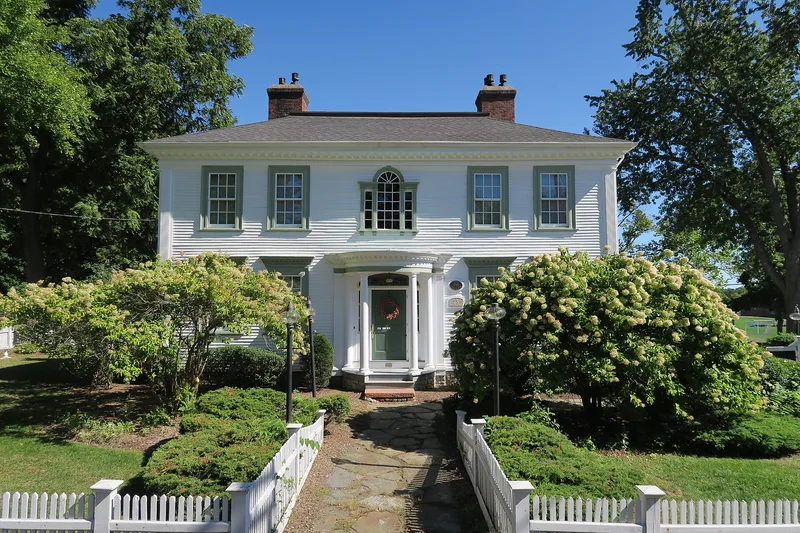
Woodbridge Street in South Hadley has been the main road to Amherst since colonial times, and this half-mile residential district preserves much of its early character. Twenty-eight structures line the street, including eight from the 18th century, among them the Second Parsonage of about 1742, the 1787 Deacon Josiah White House, the 1788 Sycamores and the Federal-style Stebbins/Condit House of about 1795. White clapboard, similar scale and generous setbacks give the street a unified look. Early families, notably the Whites and the Woodbridges, shaped the settlement, which remained agricultural through the 19th century. In the 1920s silk manufacturer Joseph A. Skinner bought much of the street, hired architect Allen H. Cox to restore several houses, and moved the Prescott Church and Schoolhouse from a town cleared for the Quabbin Reservoir, creating a small village green. These layers of settlement, architecture and preservation give the district its significance.
Machine-generated summary. This summary was generated by a language model from the official nomination document and has not been reviewed line by line by an editor. It may contain errors. Check the source document before relying on any detail. Source: nomination document (PDF) · catalog entry. Generated October 2026 (model claude-sonnet-5-5, prompt v1.0-2026-10-29).
| Styles | Georgian, Federal, Greek Revival and Victorian houses, with vernacular New England farmhouses |
|---|---|
| Areas of significance | Education, Exploration/Settlement, Architecture |
| Acreage | 66 |
| Boundary source | NPS cultural-resource GIS polygon |
| Full listing page | Woodbridge Street Historic District (property record) |
What listing means for this property
This is a historic district. Buildings within its boundary are either contributing (they add to the district's significance) or non-contributing. Owners of contributing income-producing buildings can claim the 20% federal rehabilitation tax credit; homeowners should look at state credits. National Register districts impose no design review by themselves; a local historic district ordinance, if one exists, does (the difference explained).
General information, not legal or tax advice. Rules change; confirm with your State Historic Preservation Office or a qualified adviser.