Woburn Street Historic District

Why it's listed
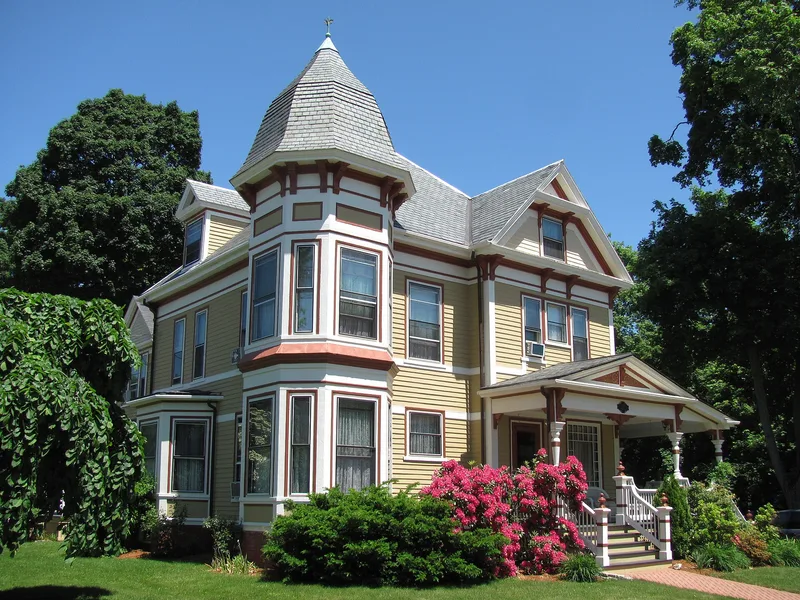
Woburn Street in Reading, between Temple Street and Summer Avenue, is lined with 16 buildings on spacious, landscaped lots: 15 houses and one church. The oldest is a Federal farmhouse built about 1795. Most of the others were built or remodeled between the late 19th century and about 1920 in styles including Queen Anne, Shingle, Colonial Revival, Stick, and Craftsman. Saint Agnes Catholic Church is a simplified High Victorian Gothic building, and an Italianate house was moved around 1908 to serve as its rectory. Former farmland here became a neighborhood for professionals and rail commuters seeking larger lots, and residents included shoe manufacturers, a bank founder, a railroad president, and architects Willard P. Adden and Horace G. Wadlin. The district was listed for its representation of suburban development for Reading's upper middle class and for its intact group of high-style residential buildings, with no intrusions. The area still functions as a home for professionals and businessmen.
Machine-generated summary. This summary was generated by a language model from the official nomination document and has not been reviewed line by line by an editor. It may contain errors. Check the source document before relying on any detail. Source: nomination document (PDF) · catalog entry. Generated October 2026 (model claude-sonnet-5-5, prompt v1.0-2026-10-29).
| Period of significance | 1795-1920 |
|---|---|
| Styles | Queen Anne, Colonial Revival, Shingle, Stick, Greek Revival, Italianate, Federal, Craftsman, High Victorian Gothic |
| Areas of significance | Architecture |
| Acreage | 10 |
| Boundary source | NPS cultural-resource GIS polygon |
| Full listing page | Woburn Street Historic District (property record) |
What listing means for this property
This is a historic district. Buildings within its boundary are either contributing (they add to the district's significance) or non-contributing. Owners of contributing income-producing buildings can claim the 20% federal rehabilitation tax credit; homeowners should look at state credits. National Register districts impose no design review by themselves; a local historic district ordinance, if one exists, does (the difference explained).
General information, not legal or tax advice. Rules change; confirm with your State Historic Preservation Office or a qualified adviser.